 In this area
The Santiago issue
Barrio Lastarria, Santiago: terraces, museums and wine on foot
A compact, culture-rich Santiago barrio where pisco sours, contemporary art and hillside walks all fit inside six cobbled blocks.
By Matías FuenzalidaMercado Central to a Maipo Cabernet
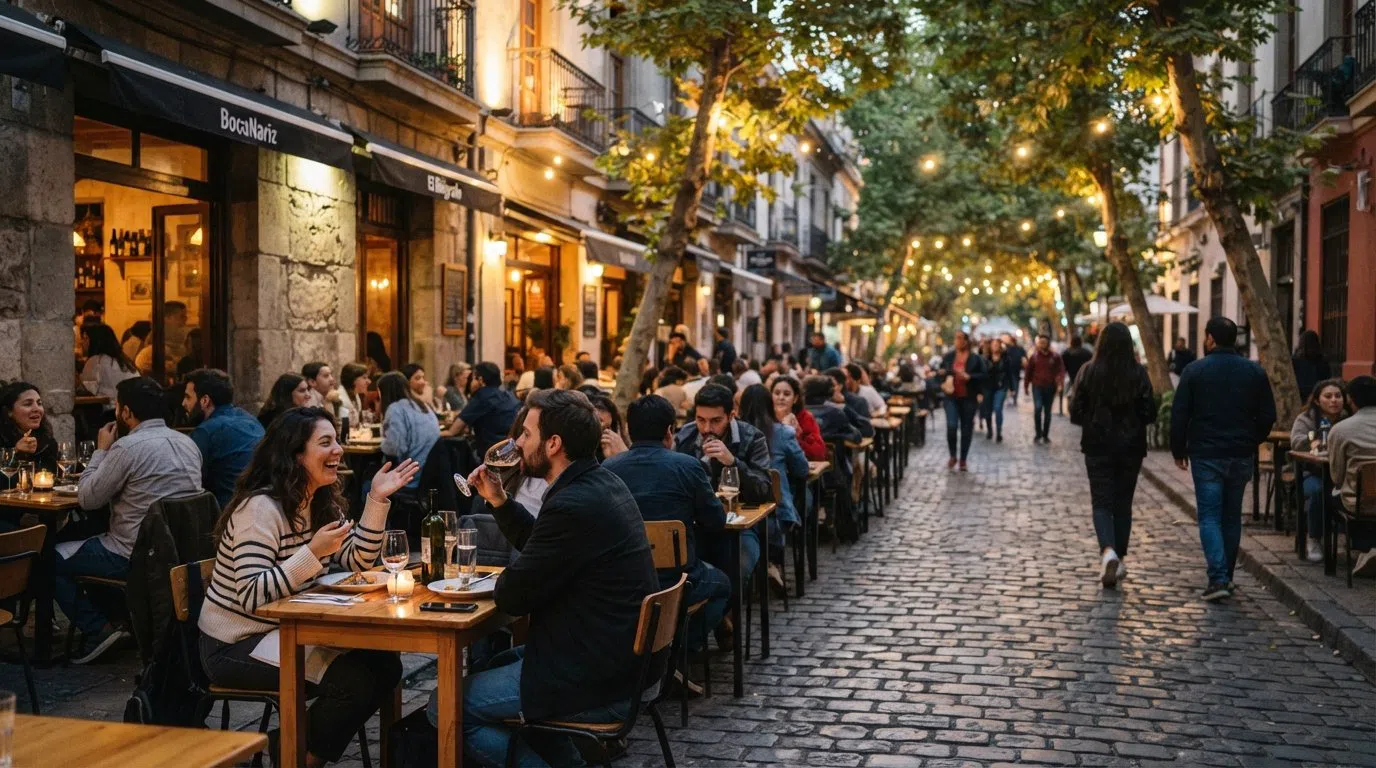
Six blocks can feel like a shrug on a map. In Lastarria, they feel like a whole argument for walking. The barrio sits between the Alameda and the muddy Mapocho, and it moves at terrace speed: chairs dragged into the shade, glasses catching light, a busker tuning up, somebody leaning over a menu as if making a moral decision. It is Santiago with its collar open. The big gesture here is not grandeur but concentration — museums, a wooded hill, an antiques fair, wine bars that know their homework, and enough good-looking facades to make you slow down whether you intended to or not.
What Barrio Lastarria is known for
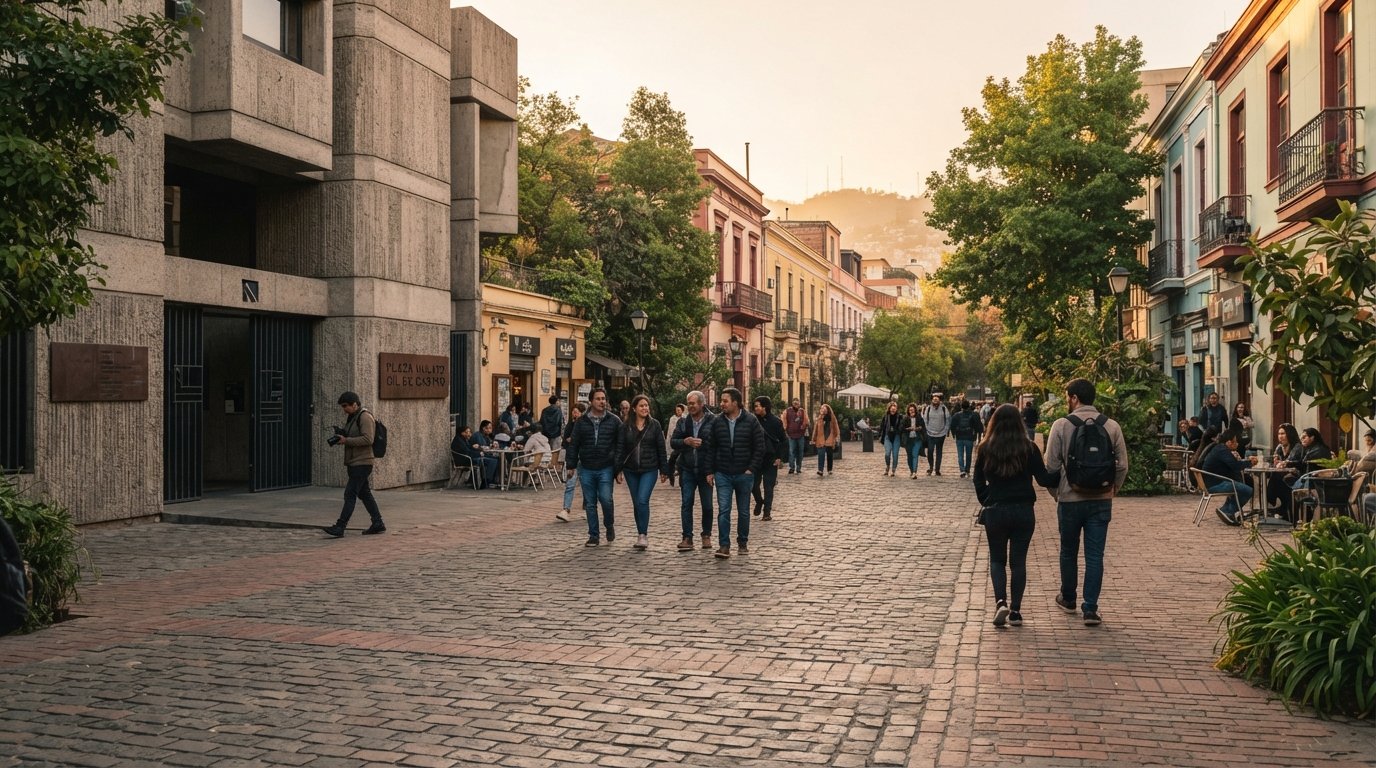
Lastarria’s name is attached to culture the way some neighbourhoods are attached to noise. Its centre of gravity is Plaza Mulato Gil de Castro, a small brick square named for a Lima-born colonial portrait painter who once kept a studio here. The square is not large, but it matters: it gives the barrio a pulse and a sense of stagecraft, the kind that makes a museum visit feel like part of a stroll rather than an appointment. On one side sits the Museo de Artes Visuales (MAVI UC), a cool concrete box for contemporary Chilean art at José Victorino Lastarria 307. It is the sort of place that reminds you Santiago has a serious modern art life without needing to raise its voice.
A block away, José Victorino Lastarria becomes pedestrian and the whole neighbourhood seems to exhale. This is the spine of the barrio, the stretch where waiters lay out chairs under the plane trees and the soundtrack is mostly clinking glasses, buskers and the odd tuned street piano. Along this run, the Feria de Antigüedades appears Thursday to Sunday, roughly from 10am to 8pm, between Rosal and Merced. It is an antiques-and-books fair, but that description is too tidy for the actual pleasure of it. There are vinyl records, old cameras, coins, jewellery, secondhand books and the occasional object that looks like it has a story better than yours. The fair is one of those city rituals that can turn a casual wander into an hour lost in paper and brass.
The barrio also has a cinephile streak that is not for show. Cine Arte El Biógrafo, at José Victorino Lastarria 181, has been screening independent and European films since 1987. It is exactly the kind of arthouse cinema a neighbourhood like this should have: unflashy, stubborn, and proof that culture here is not just a facade for cocktails. The crowd around it tends to spill from screenings into the nearby bars with the slightly dazed look of people who want to argue about a film over something chilled.
At the northern edge, Parque Forestal draws a clean line beside the Mapocho and gives the barrio air. The Museo Nacional de Bellas Artes stands there in its 1910 Beaux-Arts palace, a building that still knows how to hold a room. Nearby, the Centro Cultural Gabriela Mistral — GAM — brings a different scale and temperature, all rust-coloured architecture and public life on the Alameda. Together they make Lastarria feel less like a pocket and more like a hinge between the historic centre, the river, the park and the hill.
Plan your Santiago trip
Live prices from our booking partners.
Guests & rooms
Free cancellation on many rooms. We may earn a commission when you book.
Where to eat & drink
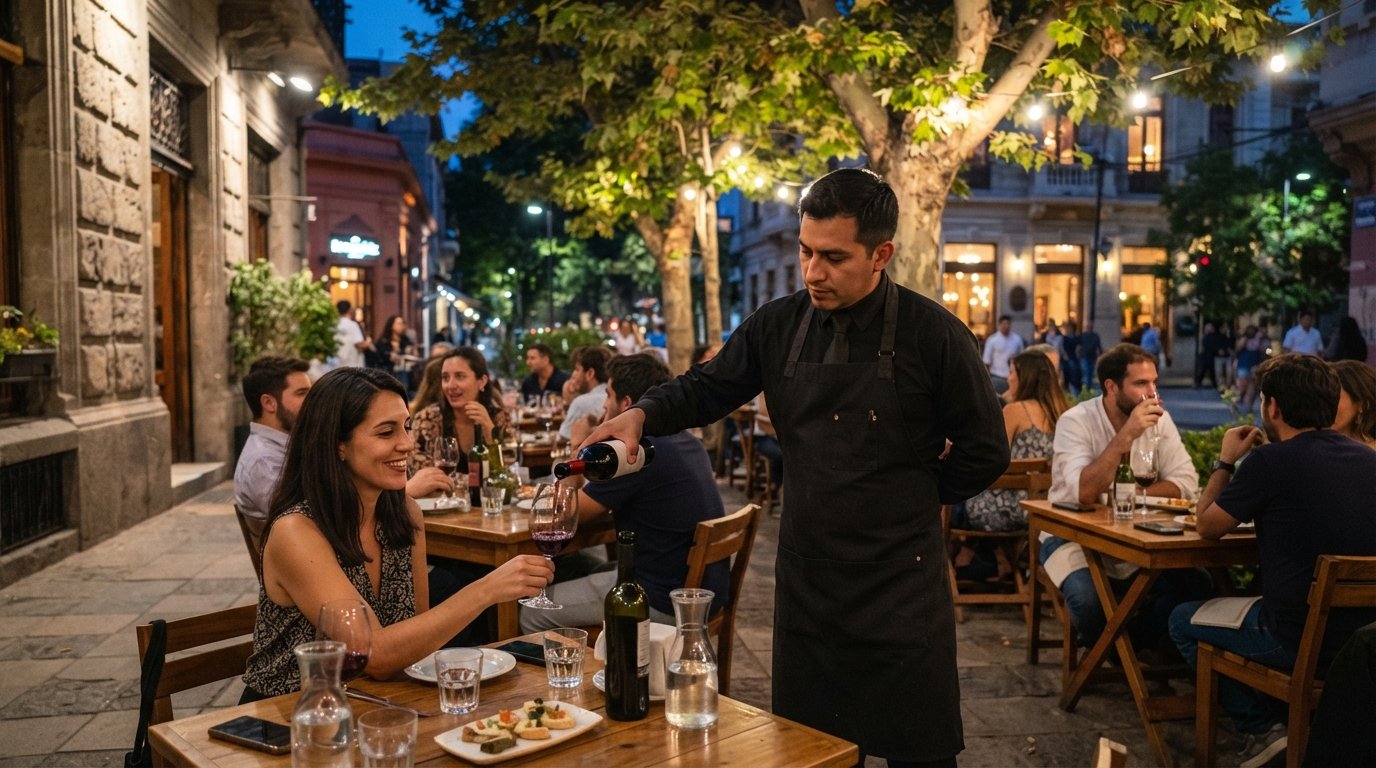
Lastarria is where Santiago comes to prove it can drink with restraint and still have a good time. The neighbourhood’s calling card is not quantity but quality, especially when wine and pisco enter the room. Bocanáriz, at José Victorino Lastarria 276, is the obvious standard-bearer. It is a wine bar with more than 300 Chilean labels and over 30 by the glass, and the real pleasure is not just the list but the people who work it. The sommeliers here build tasting flights with a confidence that feels useful rather than theatrical — north-to-south reds, for example — and the whole place has the air of a room that expects you to learn something while you drink.
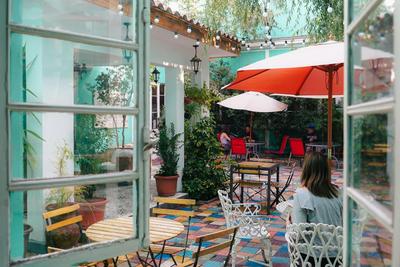
A few doors down, Chipe Libre — República Independiente del Pisco, at José Victorino Lastarria 282, is the barrio’s great cross-border argument in bar form. It calls itself the Independent Republic of Pisco, which is exactly the right amount of cheek. There are dozens of piscos, sour variations and a signature ceviche, and the leafy back patio is the place to settle in when the evening stretches out. If Bocanáriz is for the serious wine crowd, Chipe Libre is for the serious pisco crowd, though in practice the overlap is considerable. The joy here is not deciding a winner between Chile and Peru so much as admitting both sides know what they are doing.
For something more rooted and more affordable, José Ramón 277, tucked by a GAM entrance at José Ramón Gutiérrez 277, does destination-grade sanguches on marraqueta bread. Lomito, mechada and pernil arrive piled with avocado and green chilli, and the whole thing has the satisfying bluntness of a sandwich that understands its job. There is no need for fuss when the bread is right and the filling has been treated properly.
Liguria’s Lastarria branch, on the corner of Merced in the 1906 Casa Valdés Freire, brings a different kind of gravity. It is a bar-bistro with Chilean comfort food and some of the city’s best pisco sours, and it wears its mansion setting with enough confidence to avoid becoming precious. This is the place for a long lunch that accidentally becomes late afternoon, or for a dinner that begins with the idea of “just one drink” and ends with the table looking as if a small, civilized campaign has taken place.
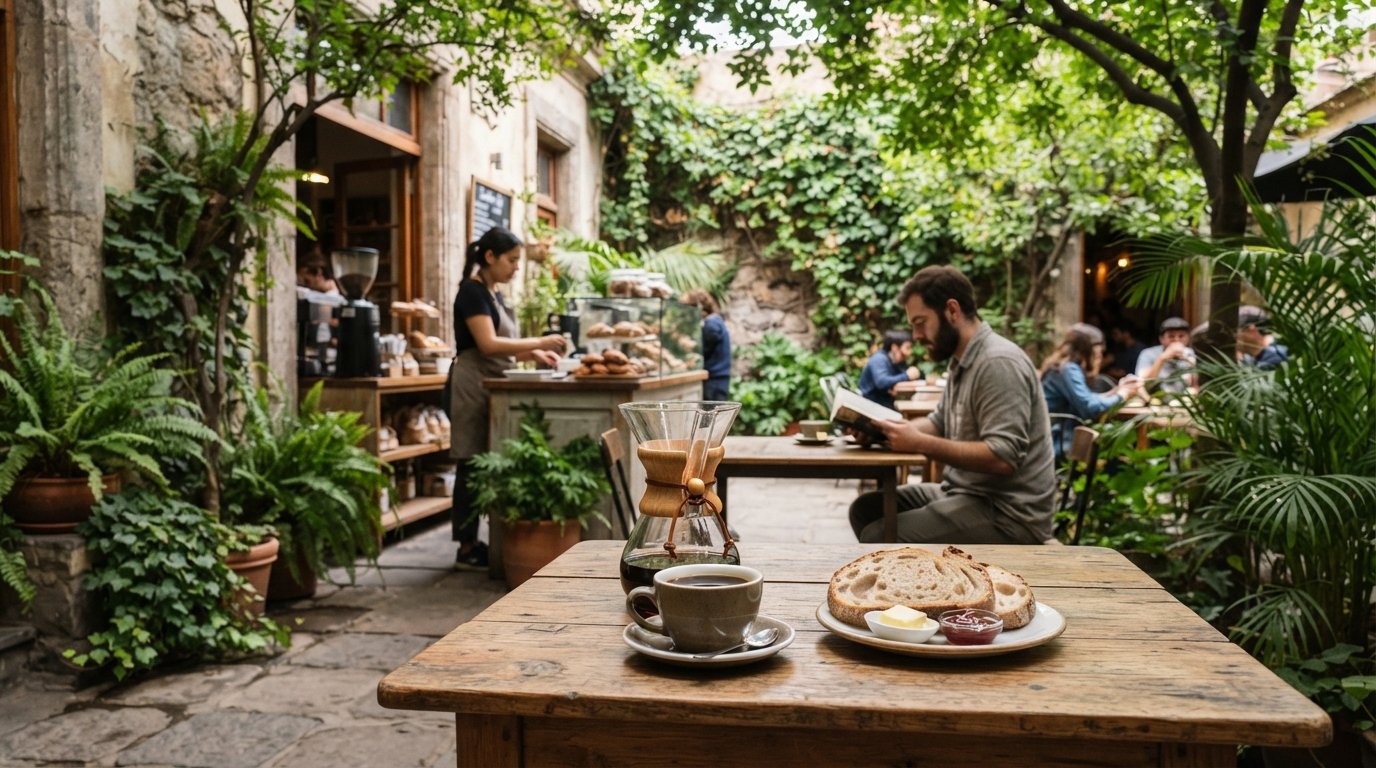
Coffee here has its own little court. Colmado, at Merced 346, hides in a leafy courtyard and treats beans with proper seriousness: Chemex, AeroPress or siphon, plus good bread and vegan-friendly plates. It is the kind of café that makes an argument for pause. And then there is Emporio La Rosa at Merced 291, where rose, lúcuma and dulce-de-leche ice cream have earned their place on world-best lists. A scoop here is not a grand finale so much as a sensible way to keep walking.
Going out
At night, Lastarria does not become louder so much as more legible. The main street turns into one continuous open-air room, with tables and heaters spilling from Chipe Libre, Bocanáriz and their neighbours. The crowd is grown-up and unhurried; nobody is pretending this is a dance district. It is a place for a second bottle, a third conversation, and the pleasant refusal to rush home. Buskers drift through. The odd street piano appears. The whole thing feels like Santiago remembering that evenings can still be social without becoming chaotic.
Chipe Libre’s back patio is the classic move if you want to spend a long evening working through pisco sour variations and the Chile-versus-Peru debate that never really ends. Bocanáriz keeps the wine crowd busy after dinner, which is exactly what a good wine bar should do: hold the room without performing for it. For a more elevated view of the city’s after-dark polish, The Singular Santiago rooftop bar does its well-known Pisco Sour Royale with the Andes in the distance, while Punto Ocho at Hotel Cumbres Lastarria lifts the evening a little higher, over Parque Forestal and the roofs below.
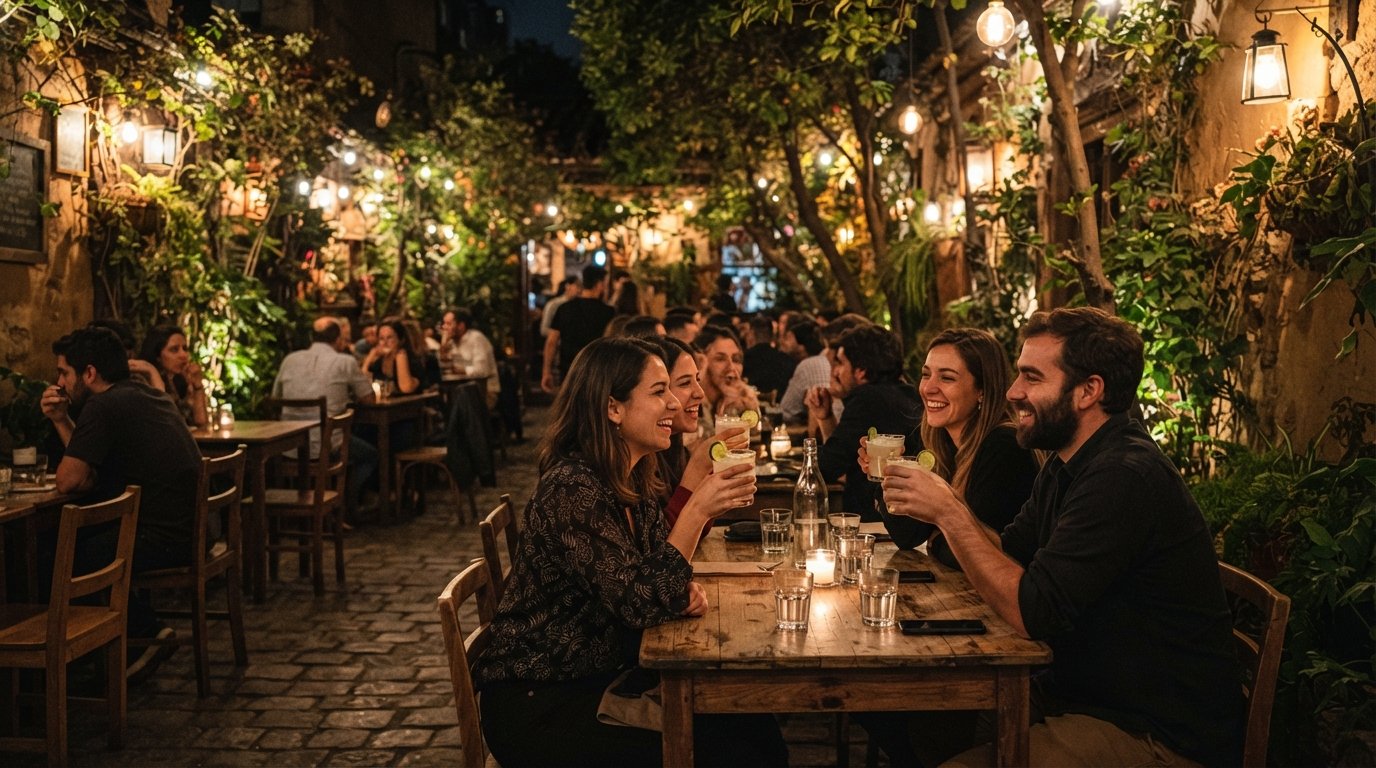
This is not a 4am district, and it makes no apology for that. Lastarria tends to wind down earlier than Bellavista, which is a short walk or taxi across the river if you want the second act to be rowdier. Here, the civic virtue is knowing when a neighbourhood has already said enough for the day. That may sound like faint praise. It is not. There is real pleasure in a place that understands the difference between atmosphere and noise.
Things to do / what to see
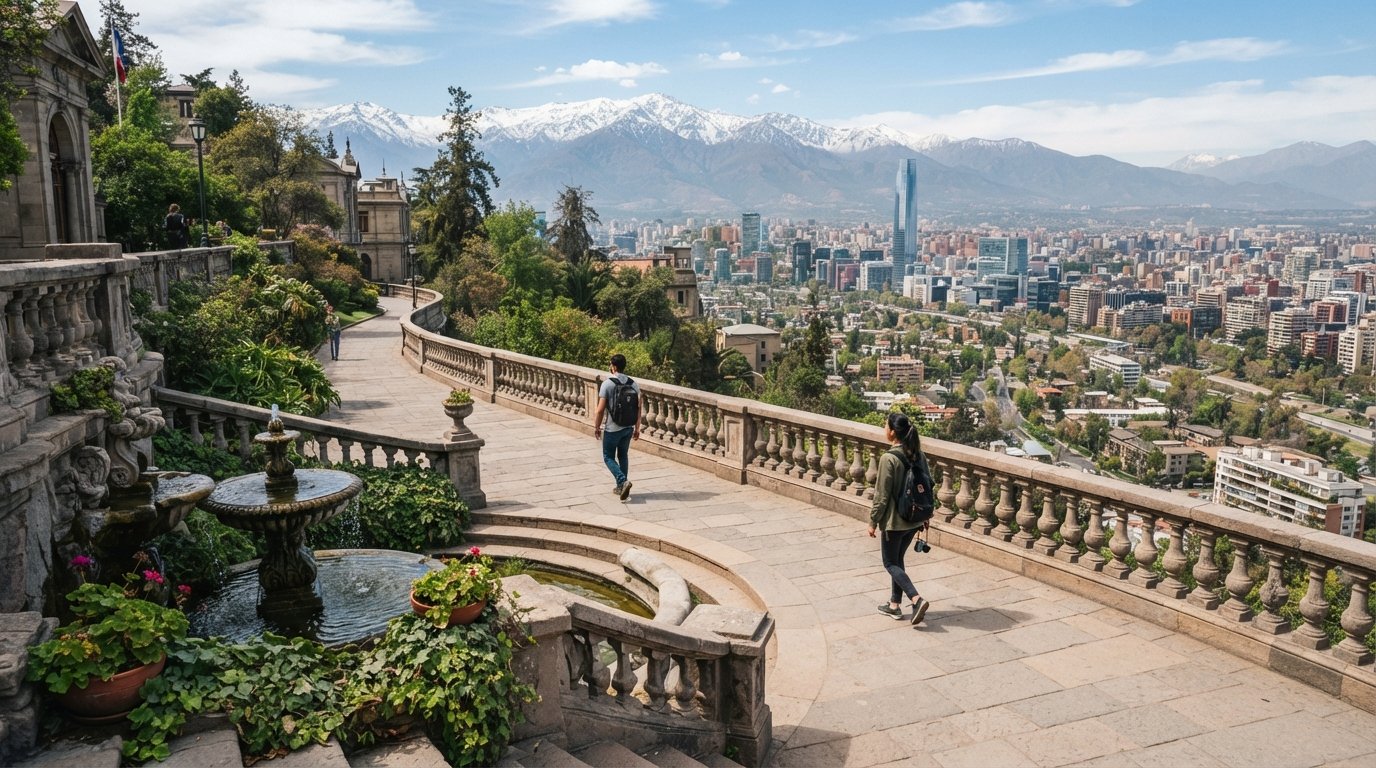
Start with Cerro Santa Lucía, because the barrio is always tilting toward it anyway. The hill is 69 metres high, wooded and free to climb, with terraced paths, fountains and a neo-gothic castle facade that feels almost absurd until you reach the summit terrace and look out over the city. On a clear day, the Andes arrive in the distance like a second horizon. It is one of those Santiago views that makes the city’s scale suddenly intelligible: the centre compressed below, the mountains doing the long work of the skyline.
From there, Parque Forestal runs along the northern boundary beside the Mapocho, with jacarandas, benches and public sculpture. On Sundays, the main avenues become a ciclovía for cyclists and runners, which gives the park a different energy — less promenade, more local habit. It is a good place to remember that Lastarria is not only about indoor culture. It is also about moving through a city that still leaves room for people to be outside together.
The Museo Nacional de Bellas Artes, open Tuesday to Sunday, is the country’s flagship art museum and one of the barrio’s anchor points. Housed in a 1910 Beaux-Arts palace, it is strong on Chilean painting and sculpture, and it shares the building’s back half with the contemporary MAC. Right nearby, the Centro Cultural Gabriela Mistral stages theatre, dance and free exhibitions in a landmark building whose architecture is worth the visit even before you know what is on.
Smaller stops fill the gaps neatly. MAVI on Plaza Mulato Gil de Castro keeps contemporary Chilean art close to the street. Cine Arte El Biógrafo gives the neighbourhood its arthouse pulse. The Feria de Antigüedades, Thursday to Sunday, is where you rummage through old vinyl and books and emerge with something you did not know you wanted. The beauty of Lastarria is that these aren’t separate errands; they are all part of the same walk.
Don’t miss in Barrio Lastarria
Centro Gabriela Mistral (GAM) cultural hub
The walking paths of Cerro Santa Lucía
The weekend antique and book market on Calle Lastarria
Shopping & markets
Lastarria does not do shopping in the loud, polished, mall sense. Its retail life is smaller, older and more curious. The Feria de Antigüedades is the signature, and it deserves that status. Along José Victorino Lastarria between Rosal and Merced, the stalls hold old cameras, vinyl, coins, jewellery and secondhand books. It is a fair that rewards patience more than intention. You come looking for one thing and leave with another, which is the right way to shop in a neighbourhood like this.
Between the cafes and galleries, the restored mansions hide independent design shops, ceramic and jewellery studios and a scatter of bookshops. The pleasure is in wandering the main street and the short side lanes, then ducking through any open courtyard that looks as if it might contain a good object or a good espresso. The museum shops at the Museo Nacional de Bellas Artes and GAM are also worth your time for design-led Chilean prints, books and objects. If you want a serious retail binge, this is not the barrio for it. Providencia and the Costanera Center malls are a few metro stops east. Here, the hunt is the point.
Where to stay in Barrio Lastarria
Lastarria is one of Santiago’s most sensible first bases, and also one of its most pleasant. It is central, walkable, connected and full of character without becoming a theme park. The hotel stock leans boutique and design-led, which suits the barrio’s scale. The Singular Santiago is the luxury benchmark: a heritage-styled five-star with a rooftop bar, and rooms that typically run around US$200–500 a night. Hotel Cumbres Lastarria sits right on José Victorino Lastarria, at No. 299, with a rooftop pool and Punto Ocho restaurant looking over Parque Forestal. For mid-range, Lastarria Hotel & Aparts is a clean, modern boutique steps from the terraces and museums, usually around US$100–175, while Casa Bueras offers a stylish boutique option on the barrio’s edge toward Bellavista.
The best advice is simple: stay on or just off José Victorino Lastarria, or around Plaza Mulato Gil de Castro, if you want the full atmosphere. If you are a light sleeper, give yourself one block’s distance from the busiest terrace stretch. The area’s live hotel availability and prices appear below.
Hotels in Barrio Lastarria
Our best-rated stays in this neighbourhood. Prices are approximate “from” rates — confirmed at the provider when you continue. We may earn a commission if you book through our partners — at no extra cost to you.
In this area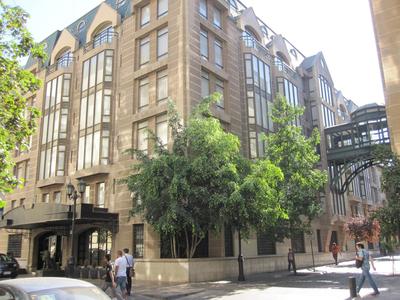 In this area
 In this area
Barrio Lastarria
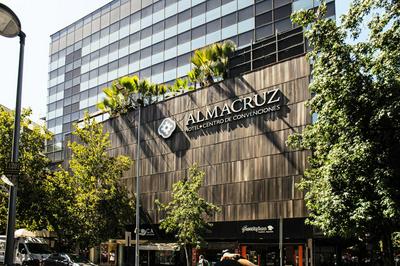
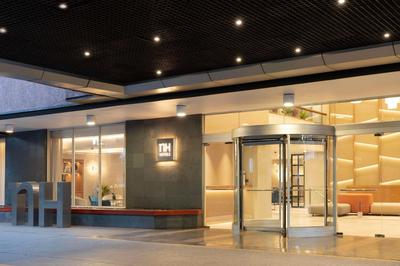
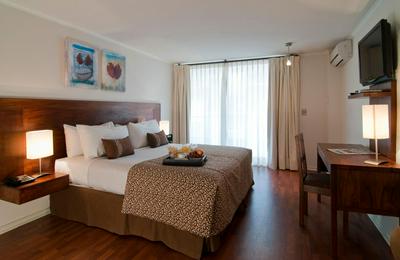
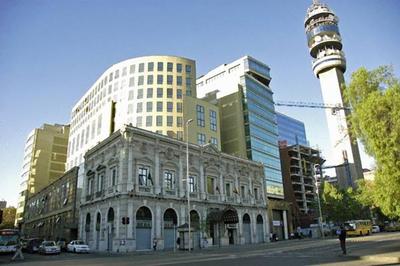
Almacruz Hotel y Centro de Convenciones (Ex Galerías)
8.3· 4,104 reviews
approx. from£55 / nightSee prices
 In this area
 In this area
 In this area
 In this area
 In this area
Barrio Lastarria
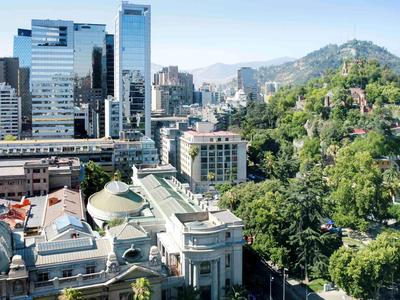
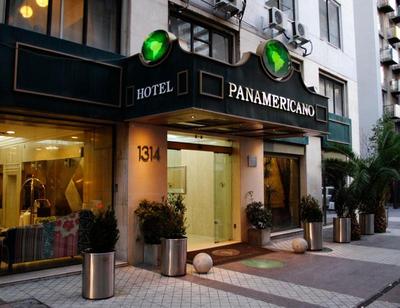
Hotel Diego de Almagro Santiago Centro
7.7· 2,319 reviews
approx. from£73 / nightSee prices
 In this area
 In this area
 In this area
 In this area
Getting around
Lastarria is a walking barrio. Six or so compact blocks can be crossed end to end in about ten minutes, so once you are here, transport becomes a question of arrival and departure rather than movement within the neighbourhood. Two metro stations bracket it: Universidad Católica on Line 1, by GAM on the Alameda, and Bellas Artes on Line 5 to the north near the Fine Arts Museum. Both are about a five-minute walk from the terraces. Line 1 runs straight west to the historic centre and east to Providencia, El Golf and the Costanera Center.
Buy a rechargeable Bip! card at any station for the metro and Red buses. On foot, you can reach Plaza de Armas and the centre in about 15 to 20 minutes, and Bellavista is a short walk across the Mapocho if the night asks for more noise. From the airport, allow roughly 30 to 45 minutes by taxi or ride-hail depending on traffic; the official airport bus plus a metro transfer is the budget option. Ride-hail apps are cheap and widely used, which is the civilized way home when the streets go quiet.
Gallery
Barrio Lastarria in pictures
Barrio Lastarria — your questions
Is Barrio Lastarria a good area to stay in Santiago?
Yes — for most visitors it is one of the best bases in the city. It is central, walkable and well connected, with two metro lines, major museums, Cerro Santa Lucía and the best wine and pisco bars all within a few blocks. It is pricier and quieter late at night than Bellavista, but that is part of the bargain.
Is Lastarria safe?
By day and during the busy early-evening terrace hours, it is one of the more pleasant parts of central Santiago. As always in a big city, keep your phone out of sight, watch for pickpockets on crowded metro trains and use a taxi or ride-hail rather than walking quiet blocks alone late at night.
What is Barrio Lastarria known for?
Culture and food-and-wine, all packed into a small, walkable grid. It is home to the National Fine Arts Museum, GAM and MAVI, the arthouse El Biógrafo cinema, a weekend antiques fair and Cerro Santa Lucía, wrapped around terrace-lined streets full of pisco spots and wine bars.
Is Lastarria good for nightlife?
Yes, if your idea of nightlife is dinner, cocktails and conversation rather than clubbing. The terraces along José Victorino Lastarria are the draw, especially at Chipe Libre and Bocanáriz. For a later, rowdier night, Bellavista is the better second stop.