 In this area
The Santiago issue
Barrio Brasil, Santiago: faded mansions, cheap beer and a bohemian late-night pulse
Santiago’s old mining aristocracy left behind neo-gothic churches and Haussmann-style mansions; artists, students and cheap bars moved in, and Barrio Brasil has been running beautifully on the fumes ever since.
By Matías FuenzalidaMercado Central to a Maipo Cabernet
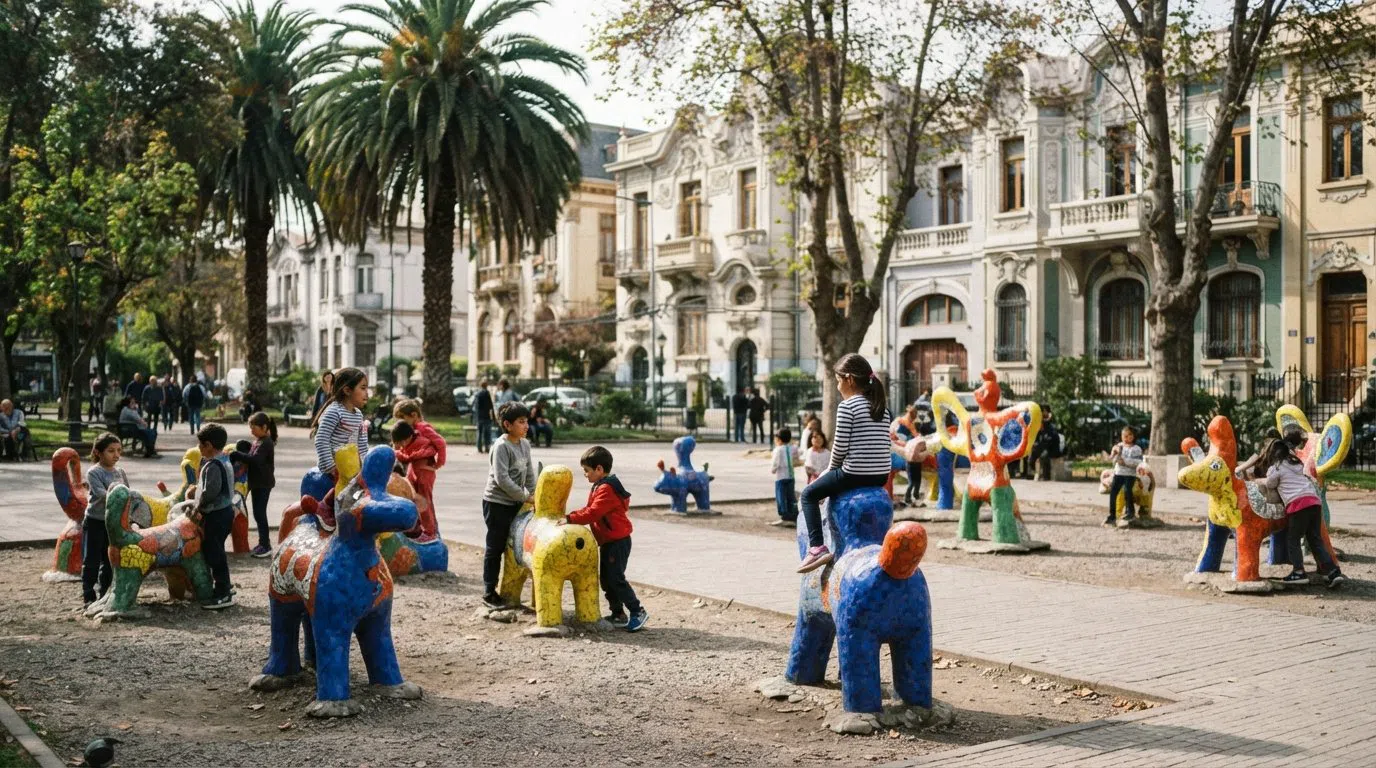
Twenty-two lurid play-sculptures by Federica Matta sit in the middle of Plaza Brasil, and on a warm afternoon the square works exactly as it should: children clambering over bright, cartoonish bodies, students nursing litre bottles of beer, a busker tuning up as if the whole barrio were one long rehearsal. That is Barrio Brasil in a nutshell — a place built by Santiago’s mining aristocracy, abandoned by them, then occupied by artists and students who found cheap rooms in the 1990s and never quite left. It is faded grandeur with a hangover, and the hangover has a soundtrack.
What Barrio Brasil is known for
The first thing to understand about Barrio Brasil is that it has two reputations and they are both true. One is architectural: this was the address of the city’s elite during the nitrate boom, when wealth bought neo-gothic churches, art-nouveau flourishes, Haussmann-style facades and Spanish-neoclassical mansions. The other is social: after the wealthy families decamped east and a highway severed the barrio from the old centre in the mid-20th century, the big houses went cheap, the rooms got divided up, and the artists moved in. By the 1990s the barrio had become Santiago’s bohemian bargain bin, and when it was declared a protected Typical Zone in 2009, the streetscape was effectively frozen mid-decay — ornate, scruffy, and gloriously unpolished.
That tension is what gives the district its charm. You can stand on Plaza Brasil, with its 1902 pedigree and its 22 Federica Matta sculptures, and look one way at a family picnic, another at a punk soundcheck, and a third at a mechanic’s garage. The barrio does not separate its functions for your convenience. It just keeps going.
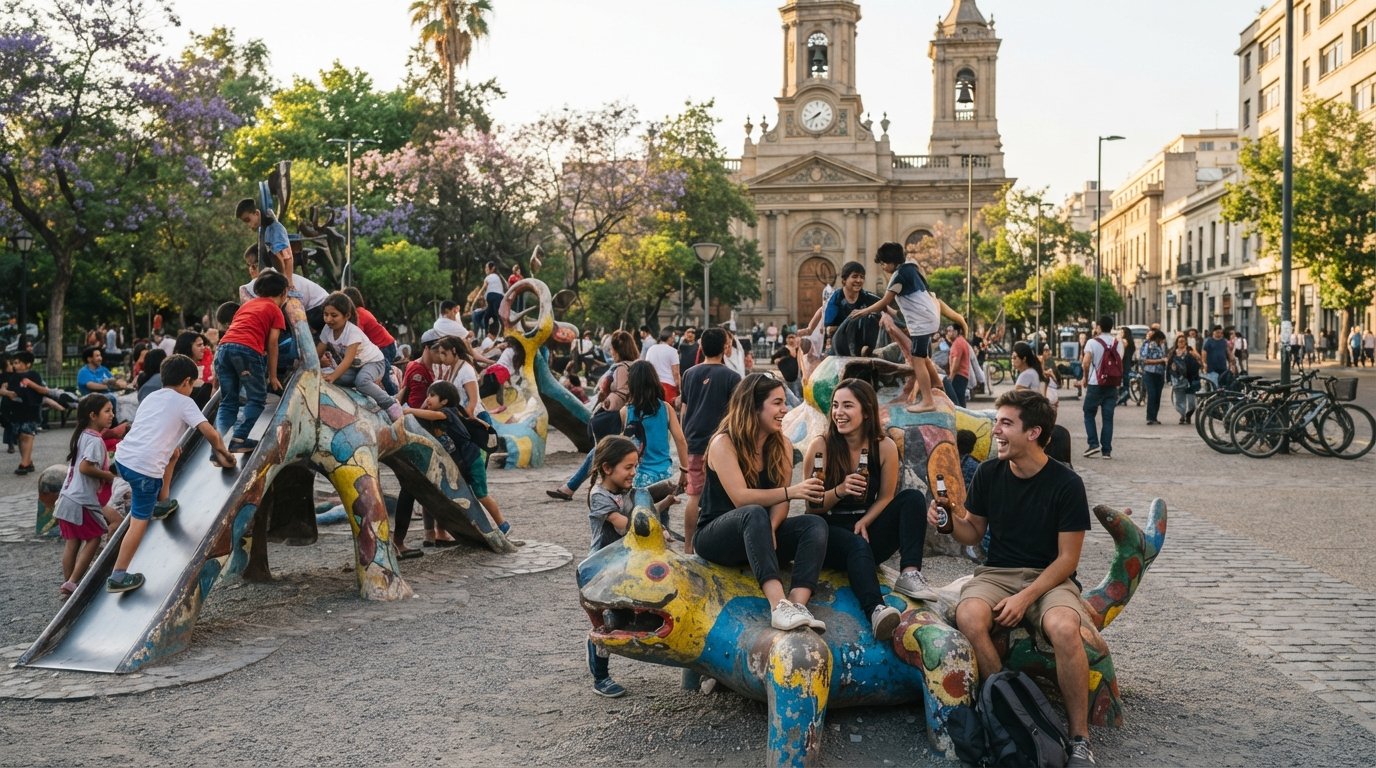
Walk a few blocks and the churches begin to loom, doing their best impression of European cathedrals in the middle of Santiago. The neo-gothic Congregación de la Preciosa Sangre on Compañía de Jesús, built between 1873 and 1901 by the French architect Eugenio Joannon, is one of those buildings that makes you slow down without meaning to. So is the vast Basílica del Salvador on Almirante Barroso, which dominates the skyline with the kind of solemnity that makes the surrounding bars seem even more boisterous by contrast.
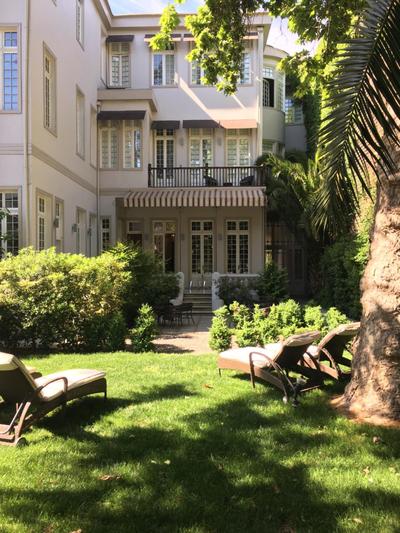
The barrio’s magic is that nothing has been tidied into a theme. The mansions are still there, but many are carved into apartments, hostels and boutique hotels. The streets are protected, yes, but protection is not the same as polish. This is a barrio where beauty comes with chipped paint and a little street noise. That is not a defect. It is the point.
Plan your Santiago trip
Live prices from our booking partners.
Guests & rooms
Free cancellation on many rooms. We may earn a commission when you book.
Where to eat & drink
Barrio Brasil earns its keep at the table. This is not a neighbourhood of tasting menus and linen napkins; it is a district of parrillas, cocinerías, chorrillanas and portions that look as though they were plated by someone with a grudge. The food is defiantly Chilean, often cheap, and almost always better than it needs to be.
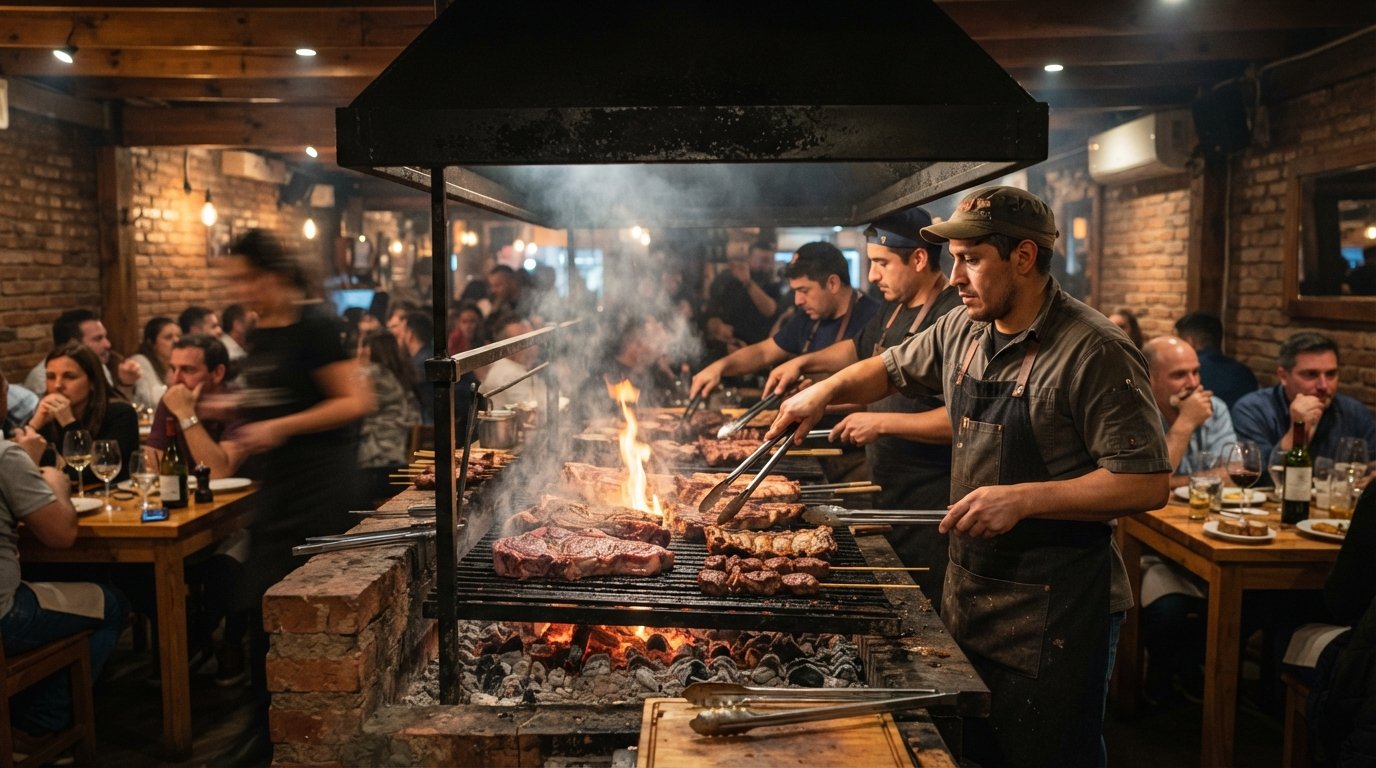
Start with Las Vacas Gordas at Cienfuegos 280, a landmark parrilla that has been operating since 1998 in a converted mechanic’s garage. The room announces itself with an enormous open grill at the front, where steaks, ribs, pork and machas a la parmesana are charred and sent out to tables that are usually full of loud, happy people who know exactly why they came. The bread keeps arriving. The room keeps humming. It is boisterous in the best possible way, and it rewards the sensible instinct to book ahead or arrive early.
For a more old-school kind of comfort, Restaurante Juan y Medio on Plaza Brasil at Huérfanos 2076 has been feeding the barrio since 1947. This is the place for estofado, charquicán, pastel de choclo and cazuela in portions that make you wonder whether the kitchen is cooking for one person or an entire football team. It is the sort of restaurant where you leave with a doggy bag and no regrets. In a city that sometimes likes to dress up its nostalgia, Juan y Medio keeps it plain and generous.
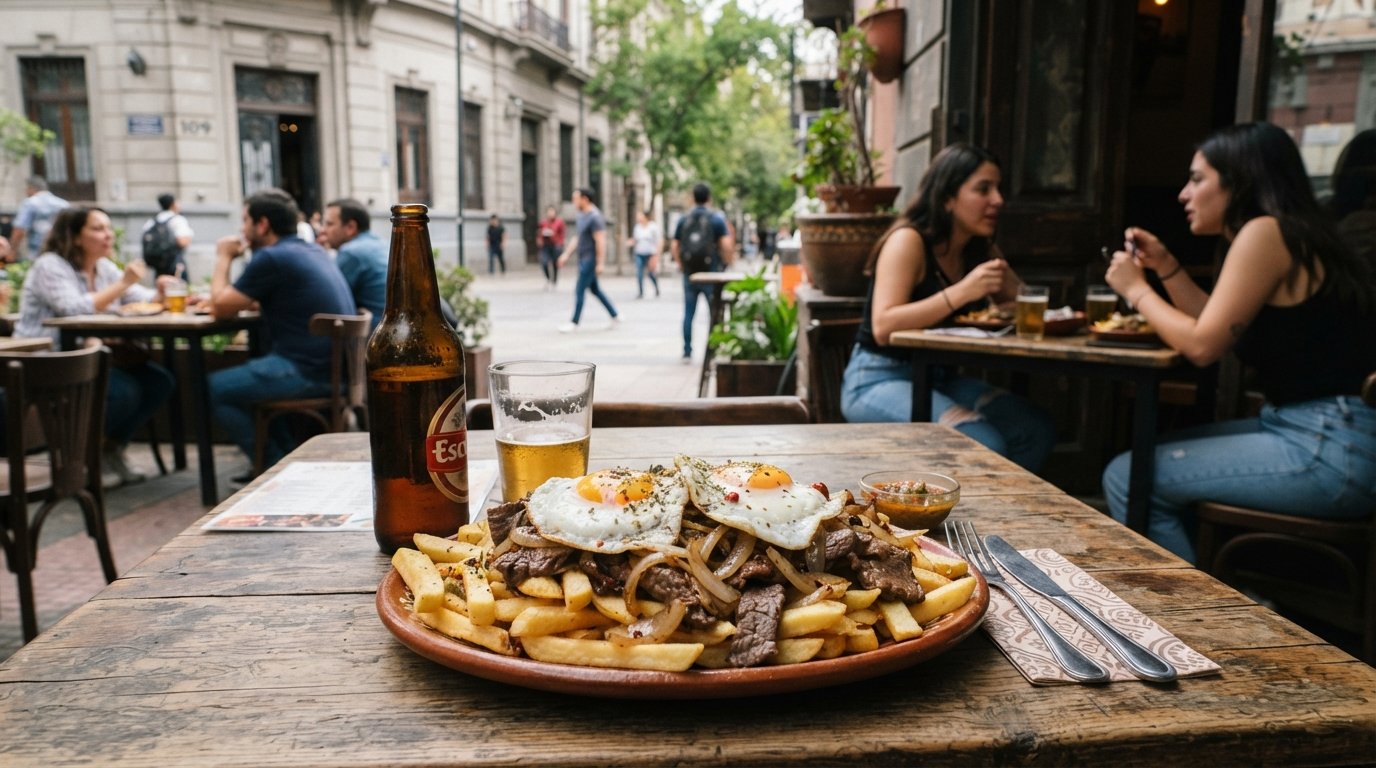
Then there is Santo Barrio at Avenida Brasil 109, which understands that a proper night out often begins with something fried, something salty and something cold. Its chorrillanas — that great Chilean hangover plate of chips buried under sliced beef, fried onion and egg — come in four or five versions, and the fridge holds some fifty mostly imported bottled beers. This is the kind of place where the table fills up before the plates do.
A few doors along, Estrella Marina Sushi Fusión at Avenida Brasil 333 offers a different rhythm entirely: Peruvian-Japanese nikkei rolls and ceviche, with the bonus of looking over Plaza Brasil. It is one of the neighbourhood’s more modern propositions, but it still belongs to the same easy, mixed-up energy that defines the barrio. Meat, beer, sushi, plaza. Santiago, being Santiago, sees no contradiction.
For a slower pleasure, Café Cupido at Compañía de Jesús 2131 is a hidden vintage tearoom in a heritage building facing the plaza. There is no sign; you ring the doorbell and wait to be let in, which already feels like entering someone’s private memory. Inside, it is all coffee with melted chocolate and outrageous dulce-de-leche waffles, the sort of thing that can turn an afternoon into a small, sticky event.
Going out
Barrio Brasil goes out the way it does most things: cheaply, loudly and without much interest in appearing refined. The night begins on Plaza Brasil, where students gather with cheap drinks before drifting toward the bars on Avenida Brasil and Avenida Ricardo Cumming. Happy hour is a serious civic institution here, with two-for-one deals from around 5 or 6pm at a run of plaza-side bars. If you arrive early, the evening can be remarkably easy on the wallet.
The mood changes as the light drops. Live music leaks from doorways. The plaza grows busier. Somebody always seems to be carrying a speaker they should probably not be carrying. It is festive, and a bit chaotic, and deeply unselfconscious.
For the full-blooded version of a Chilean night out, Los Buenos Muchachos at Avenida Ricardo Cumming 1031 is the classic move. Since the 1970s it has been a vast parrillada bailable, where grilled-meat platters and empanadas arrive at long communal tables and a live folklore show, cueca dancing and cumbia take over the floor every single night of the year. It is unabashedly kitsch, yes, and also genuinely fun — especially if you arrive with a group and a willingness to applaud in the right places.
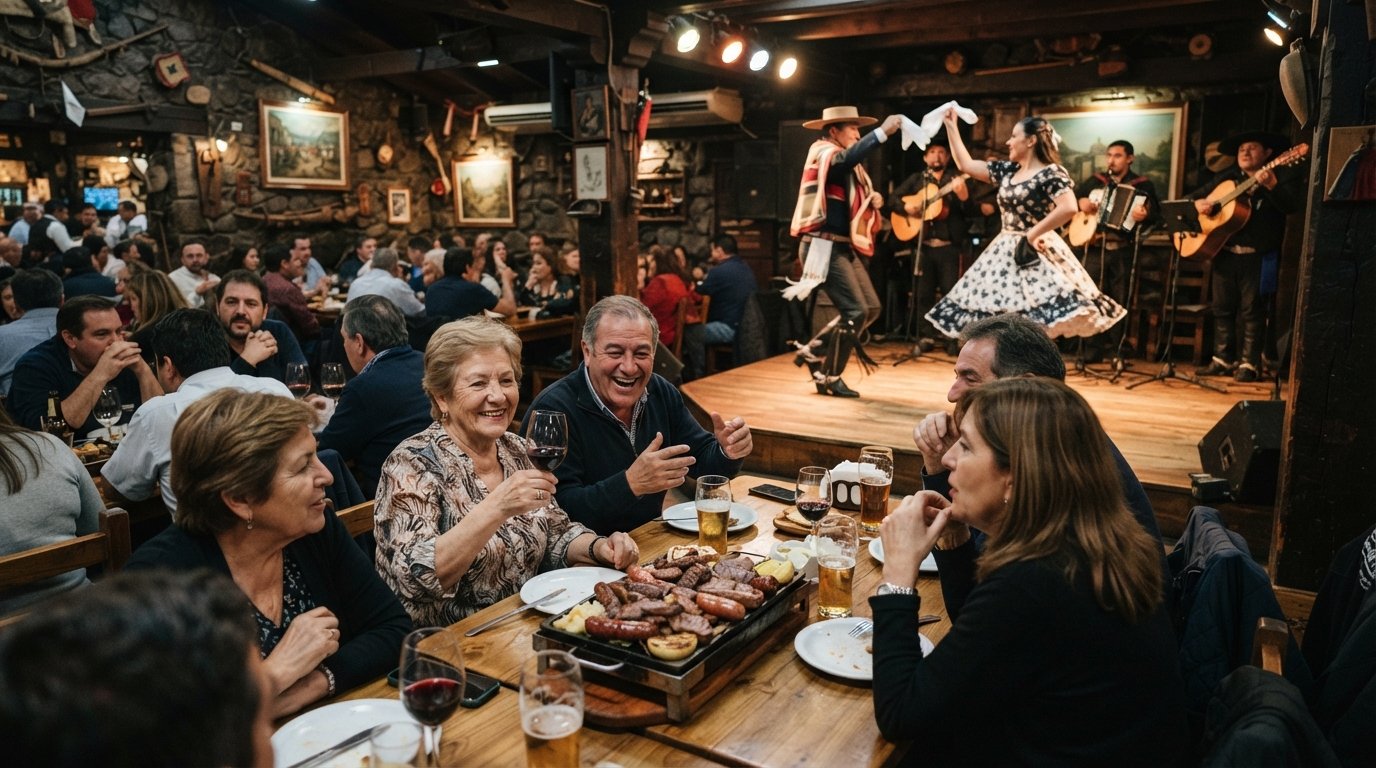
If your evening wants to turn into a proper club night, Blondie on the Alameda edge at Libertador Bernardo O'Higgins 2879 is the barrio’s escape hatch. Long-running, alternative, and reliably committed to indie, goth, ’80s and guilty-pleasure nights across multiple floors, it is one of Santiago’s classic student club institutions and a place that still understands the value of a live band.
A word from the locals, and it is worth taking: the barrio gets rowdier and lonelier late. Watch your drink, keep your phone put away, and take an Uber home rather than wandering the quiet blocks at 3am. Barrio Brasil is lively, not magical. Treat it like a real city neighbourhood and it treats you well enough.
Things to do / what to see
This is a walk-and-look barrio, and the best things in it are free. Begin, as everyone should, at Plaza Brasil. The square itself was inaugurated in 1902, and the Federica Matta sculptures make it feel less like a formal civic space than a public stage. Children use it as a playground. Students use it as a living room. The rest of the barrio uses it as a reference point.
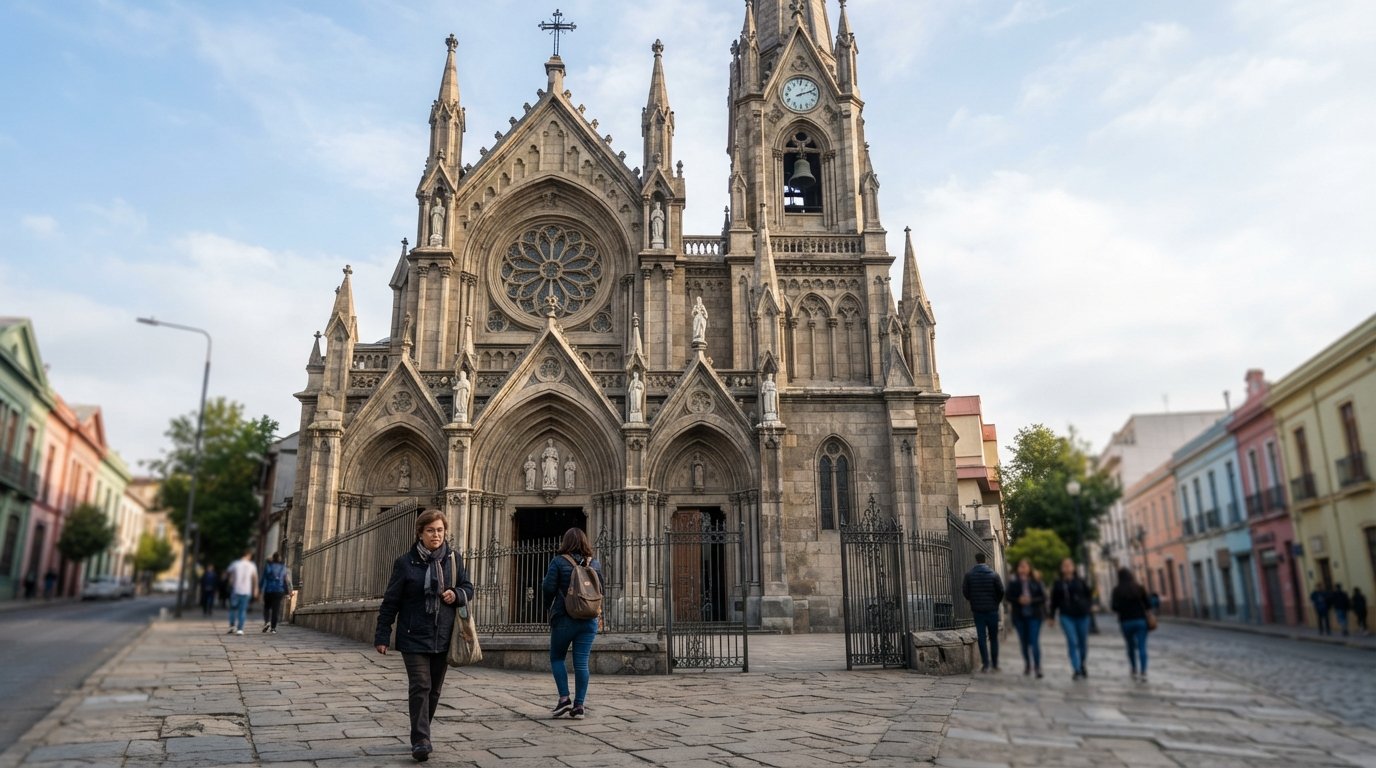
From there, set off on foot and let the protected streets do their work. The Congregación de la Preciosa Sangre on Compañía de Jesús, built between 1873 and 1901 by Eugenio Joannon, is one of the barrio’s great architectural anchors. So is the Basílica del Salvador on Almirante Barroso, a monumental neo-gothic landmark that gives the skyline a stern, almost theatrical shape. Between them are the mansions that made the barrio, the ones now split into apartments, hostels and boutique hotels, their facades carrying the marks of time with more dignity than many newer buildings manage in a whole lifetime.
If you like the hidden texture of cities, look for the cités — those narrow shared courtyards of early-1900s workers’ housing tucked behind street doors. The best examples are said to be toward Plaza Yungay on Calles Adriana Cousiño, Lucrecia Valdés and Hurtado Rodríguez. They are the kind of places you miss if you move too quickly, which is exactly why you should not move too quickly.
On the western edge, where Barrio Brasil bleeds into Estación Central, Matucana 100 at Avenida Matucana 100 is one of Santiago’s best independent cultural centres. Set in old state warehouses, it hosts rotating contemporary-art shows, theatre, dance and cinema across several galleries and stages. Check what is on and it is often free or cheap, which feels entirely in keeping with the neighbourhood’s democratic streak.
Just opposite sits Quinta Normal, Santiago’s oldest public park from the 1830s, with the Natural History Museum and the striking modern Biblioteca de Santiago in its grounds. It makes an easy add-on to a Barrio Brasil day, especially if you need a little green after the density of facades, bars and traffic.
A little farther west, and very much worth the detour, is Barrio Yungay, with its time-warp streets and the famous Peluquería Francesa (Boulevard Lavaud), the 1868 barbershop-turned-restaurant-and-museum at Compañía de Jesús 2799. Crossing into it on foot feels less like leaving one barrio and more like stepping into a neighbouring chapter of the same old story.
Don’t miss in Barrio Brasil
Plaza Brasil and its colorful metal sculptures
The neo-Gothic Basilica del Salvador
Classic neighborhood bars serving cheap pitchers of beer
Shopping & markets
Barrio Brasil is not a boutique-shopping barrio, and thank God for that. The browsing here is antiques, secondhand finds and Sunday street stalls rather than fashion. The heritage streets hide a few antiques dealers and vintage sellers among the mansions, but the real pleasure is to wander without a shopping agenda and let the barrio reveal its small, practical life: corner almacenes, panaderías, local shops and the cocinerías that double as lunch.
On Sundays, the district slows to a stroll. Families cycle the closed-off avenues, informal street markets appear on nearby blocks, and the stalls are increasingly run by Peruvian, Colombian and Ecuadorean newcomers selling used goods, produce, handmade bits and fresh tropical-fruit juices — mango, maracuyá, pineapple. It is not curated. It is alive.
For a more serious treasure hunt, dedicated bargain-hunters head south to Persa Bío Bío near Metro Franklin for antiques, vinyl and vintage everything on weekend mornings. Barrio Brasil itself is more about the rhythm of the street than the conquest of bags. You come here to eat and walk, not to shop till you collapse.
Where to stay in Barrio Brasil
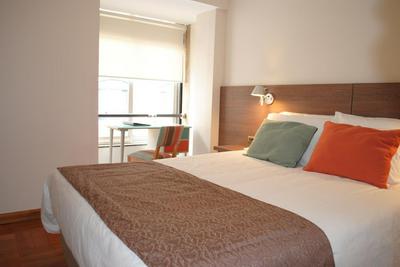
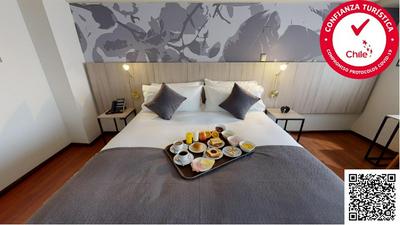
Barrio Brasil is one of the cheapest characterful bases in central Santiago, and that is a large part of its appeal. It draws a young, budget-minded crowd into hostels, guesthouses and boutique hotels carved out of old mansions, which means you can sometimes sleep under high ceilings and tiled floors without paying the sort of money Santiago’s smarter districts demand for a room with a view and a conscience.
The sweet spot is the blocks immediately around Plaza Brasil and along Avenida Brasil. That is where you are in the middle of the eating, drinking and best architecture, and still within a 15-minute walk — or one short Metro hop — of the historic centre and La Moneda. The trade-off is obvious and honest: the plaza and main avenues are lively and feel busy and safe well into the evening, but some quieter side streets can feel scruffier and emptier late at night. If you are a nervous night-walker, ask for a room on a main, well-lit street. If you plan to stay out late, plan to Uber back.
Rooms in converted heritage houses can be genuinely lovely for the price, though they come with the odd creaky, patched-up quirk that only a protected old building can provide. That is not a flaw so much as a reminder that you are sleeping in a barrio with a history, not a hotel zone with a mood board.
If you want the same heritage feel with a slightly calmer, more residential edge, Barrio Concha y Toro and Barrio Yungay sit in the same walkable orbit. The live hotels for Barrio Brasil render directly below.
Hotels in Barrio Brasil
Our best-rated stays in this neighbourhood. Prices are approximate “from” rates — confirmed at the provider when you continue. We may earn a commission if you book through our partners — at no extra cost to you.
In this area In this area
 In this area
Barrio Brasil
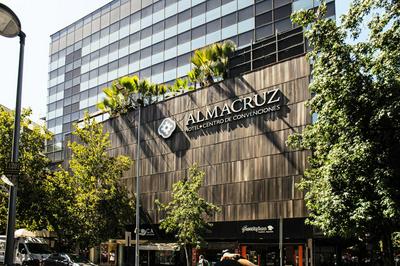
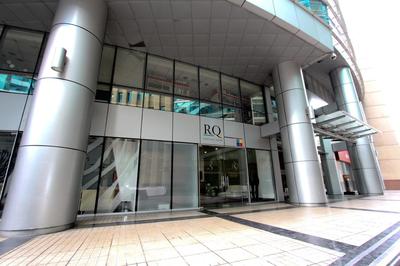
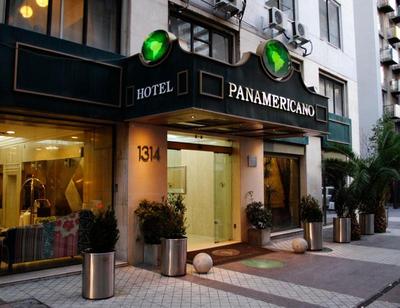
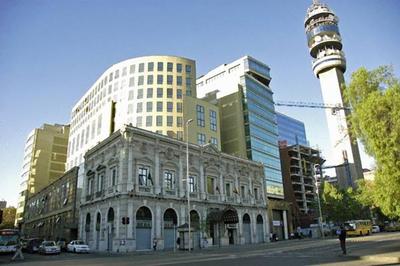
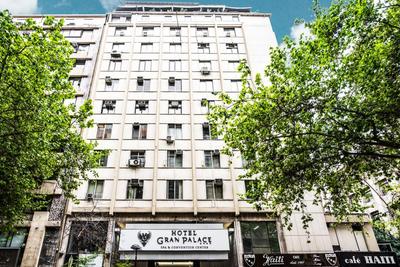
Almacruz Hotel y Centro de Convenciones (Ex Galerías)
8.3· 4,104 reviews
approx. from£61 / nightSee prices
 In this area
 In this area
 In this area
Barrio Brasil
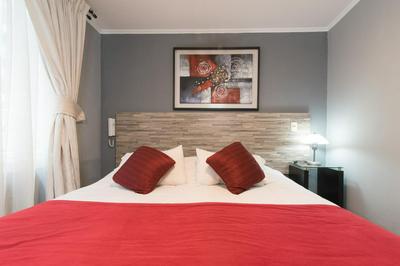
Hotel Diego de Almagro Santiago Centro
7.7· 2,319 reviews
approx. from£77 / nightSee prices
 In this area
 In this area
 In this area
 In this area
 In this area
 In this area
Getting around
Barrio Brasil is small, flat and made for walking. You can cross it in ten to fifteen minutes, and the plaza, churches, mansions and bars are all an easy stroll apart. It sits just north of the Alameda, immediately west of the historic centre, which is why it works so well as a base: central enough to be useful, close enough to the old city to matter, but not so polished that it has forgotten how to have a good time.
The handiest Metro stops are on the edges of the barrio: Cumming and Quinta Normal on Line 5 to the north and west, and República, Los Héroes and Moneda on Lines 1 and 2 along the Alameda to the south. None is more than a five-to-ten-minute walk from Plaza Brasil. From Los Héroes or Moneda you are two or three stops from the Plaza de Armas and the centre. Line 1 runs straight east to Lastarria, Providencia and Las Condes if you want the smarter barrios.
Walking to the old centre takes about fifteen minutes. For the airport, Arturo Merino Benítez, there is no Metro link: budget 30–45 minutes by taxi or ride-hail depending on traffic, or take the official airport bus into the centre and a short Uber from there. Around the barrio itself, Uber and the local ride-hail apps are the sensible way home after a late night rather than a walk through the quieter blocks.
Gallery
Barrio Brasil in pictures
Barrio Brasil — your questions
Is Barrio Brasil a good area to stay in Santiago?
Yes, if you want character, nightlife and heritage on a budget. It’s cheap, central-ish, and full of converted mansions, bars and live music. The trade-off is weekend noise around Plaza Brasil and a scruffier feel on quieter side streets late at night, so choose a room on a main road and Uber home after dark.
Is Barrio Brasil safe at night?
It’s a real, un-gentrified neighbourhood, so use normal big-city sense. The plaza and main avenues stay busy and generally feel fine into the evening, but the quieter streets thin out late. Keep your phone and drink under control, avoid wandering alone in the small hours, and take a taxi or ride-hail home.
What is Barrio Brasil known for?
Faded-grand architecture and cheap bohemian nightlife. It was built by Santiago’s elite, then taken over by artists and students, and it was declared a protected Typical Zone in 2009. Plaza Brasil, the Federica Matta sculptures, the churches, and the cheap bars give it its character.
What’s the best thing to do in Barrio Brasil?
Walk it. Start at Plaza Brasil, look at the Federica Matta sculptures, then follow the protected streets to the neo-gothic churches, mansions and cités. If you want a bigger outing, add Matucana 100 and Quinta Normal, or cross into Barrio Yungay for Peluquería Francesa.