Especial Santiago
Climbing Cerro San Cristóbal above Santiago
What it costs to get up Santiago's 880-metre hill, when the lifts and gates open, and what the summit is actually like.

Por Rhys CallowayThe city on foot — cerros, barrios and the hours that matter
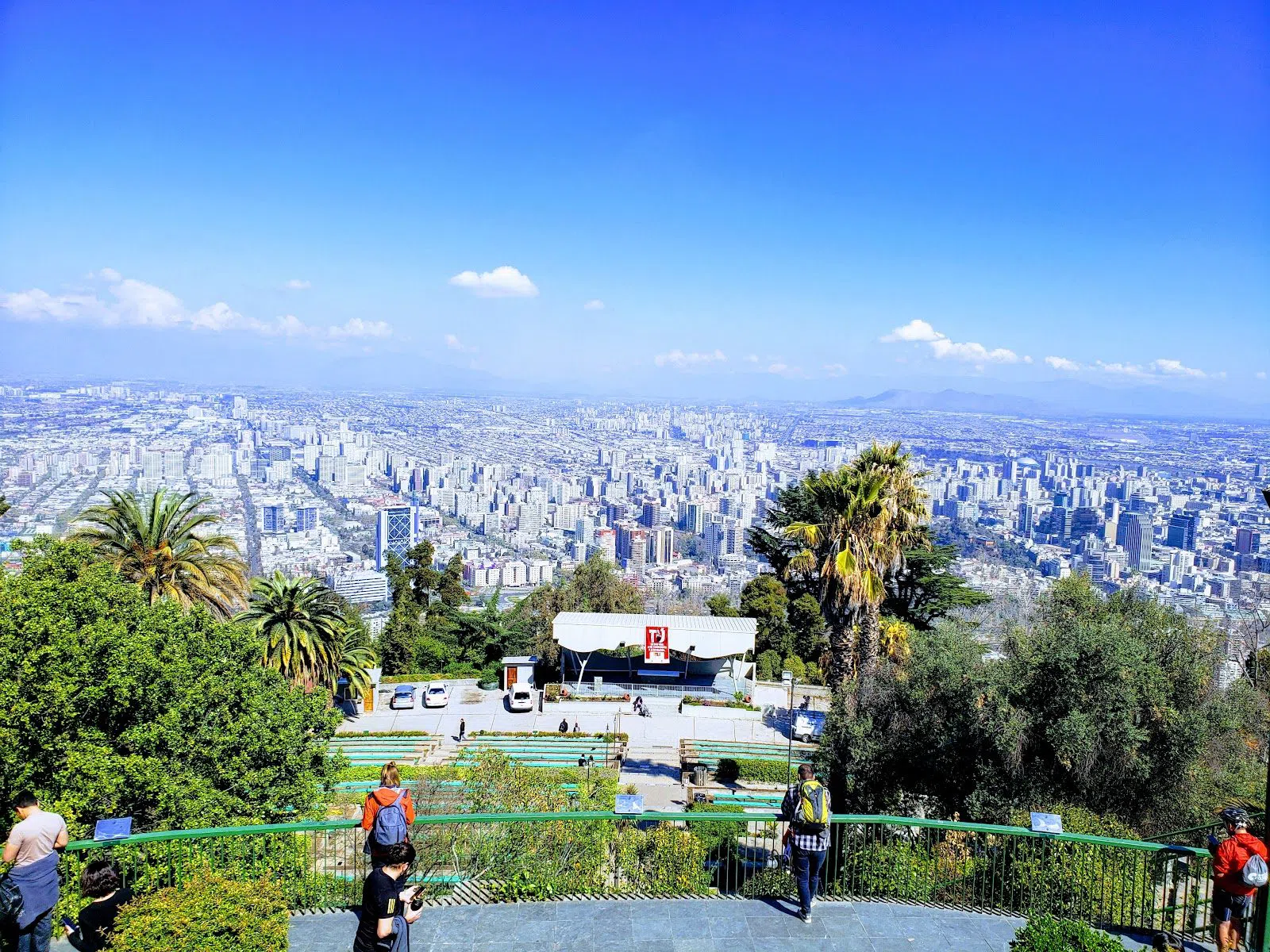
Cerro San Cristóbal rises 880 metres out of central Santiago, and the park's pedestrian gates open at 06:00 every day for nothing. The funicular has hauled passengers up the same concrete incline from Plaza Caupolicán since 1925. At the top a white statue of the Virgin stands with her arms open over the grid.
Gates, funicular and cable car
Parque Metropolitano de Santiago (Cerro San Cristóbal) covers 722 hectares across Providencia, Recoleta, Huechuraba and Vitacura. Entry is free, with no ticket and no cap, so walking groups and school parties come straight in through the gates. Pedestrian gates open daily from 06:00 to 20:30. Cyclists get 06:00 to 20:30 on weekdays and 06:00 to 12:00 at weekends and on holidays, so plan a weekend ride for the morning.

The lower slopes are dry espino and cactus scrub. A zig-zag asphalt road climbs through them to the summit statue, and walking it costs nothing. Santiago's grid sits below and the snow-streaked Andes close the view behind.
Funicular de Santiago (Plaza Caupolicán, Pío Nono) is the obvious way up and the worst queue on the hill. It runs Tuesday to Sunday, 10:00 to 19:45, Mondays from 13:00, and closes on the first Monday of every month for maintenance. One way is $1.610. A return is $2.300 Tuesday to Friday and $2.990 at weekends and on holidays. The 1925 carriage loads in batches from a stone arched base station, its cabins stepped at an angle to the slope. A ramp and lift make it wheelchair and pushchair accessible, and SENADIS cardholders ride free.

Teleférico Santiago runs Tuesday to Sunday, 10:00 to 18:45 in winter and to 19:45 in summer. One way starts at $3.150, a return at $4.050 and the Vive el Parque pass at $11.500. You buy combined passes in one transaction for the whole party. The Pío Nono line opened on 24 March 2026 and links Zoológico, Chile Nativo and Manuel Foster, 1 km in 7 minutes. It is the quietest way onto the hill. Cabins take eight people, and the window fills with Costanera Center's glass tower and the mountains. Take it when the line at the funicular's base station is long.

Planifica tu viaje a Santiago
Precios en directo de nuestros socios de reservas.
Cancelación gratuita en muchas habitaciones. Podemos recibir una comisión cuando reservas.
The terrace and the summit
Mirador Terraza Bellavista sits just below the Virgin: broad stone, a low balustrade, coin-operated viewing binoculars, and the Santiago basin spread out west and south. Mote con huesillo comes from kiosks under awnings at $2.000 to $3.000. There is no door policy and the terrace swallows a coach party without trouble; the kiosks are the bottleneck. Most visitors stop here and never climb the last flight of steps, which is worth the few extra minutes.

Santuario de la Inmaculada Concepción is the summit itself. The Virgin stands 14 metres tall on an 8.3-metre plinth, with a small chapel hollowed out beneath her and an open-air amphitheatre of concrete steps facing the mountains. Entry is free. Mass is said Monday to Saturday at 12:00 and on Sundays at 10:30 and 12:00, with confession between the two Sunday Masses. Modest dress is expected inside the chapel and quiet is asked during Mass. Time your climb away from the Masses if you want the terrace calm.

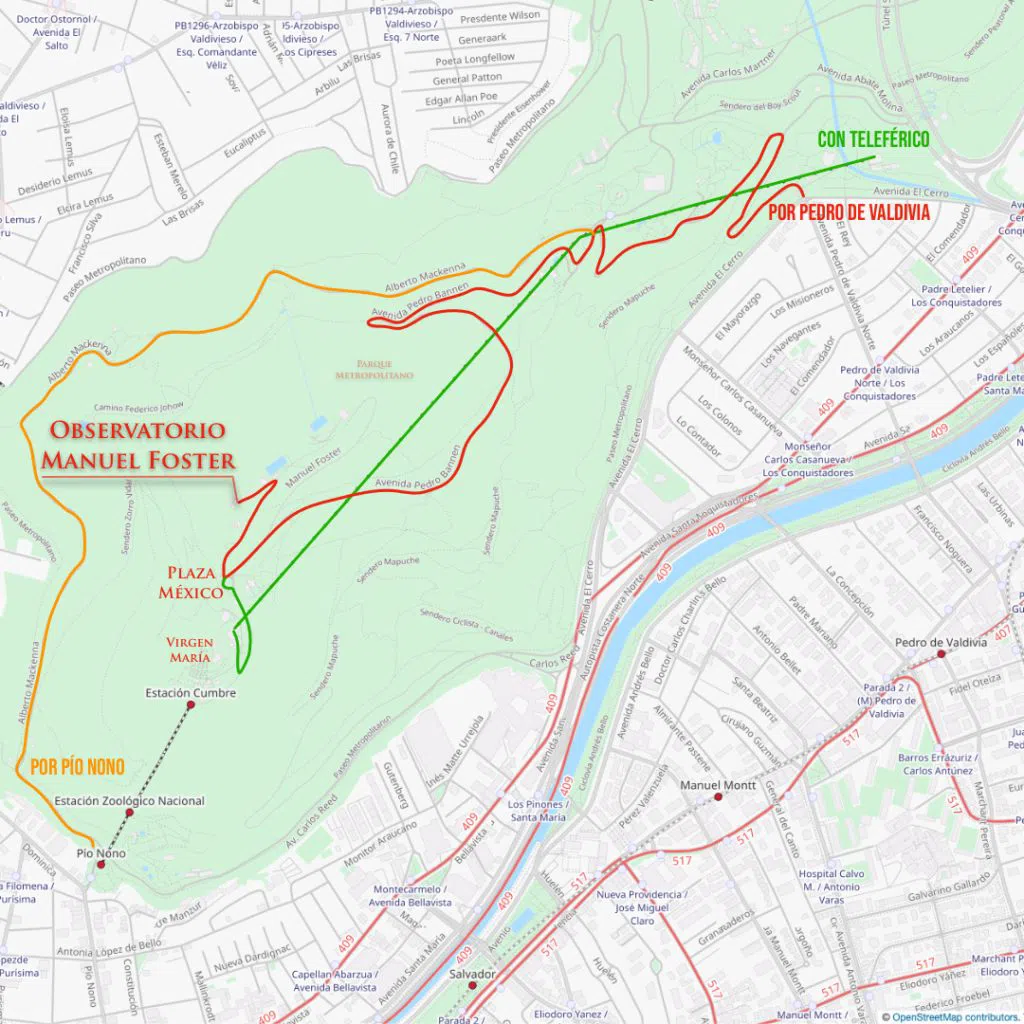
Observatorio Astronómico Manuel Foster sits on the bare summit ridge, a small white hemispherical dome beside a timber astronomer's house, with a brass 1903 refractor inside pointing through the open shutter. The observatory is more than 120 years old and opens Saturday and Sunday, 12:00 to 18:00 in summer and 11:00 to 17:00 in winter. Weekend daytime visits are walk-in, at $2.000 general, $1.000 reduced and free for under-12s. Night sessions cost $15.000 and $10.000, run to a limited capacity and must be booked ahead. A US-funded restoration of the dome and telescope began in late 2026, so confirm it is open before you travel for it.
Gardens, the zoo and the pool
Zoológico Nacional de Chile reopened on 28 January 2026 after the Pío Nono cable-car works and is free until further notice, Tuesday to Sunday from 10:00 to 18:00, closed Mondays. Reservations go through reservas.parquemet.cl/zoologico, every person needs their own booked slot, and parties that walk up are turned away. Enclosures terrace up the steep hillside behind 1925 stone retaining walls, paths climbing between the levels, with a tall condor aviary set against the slope. Recent arrivals include a pygmy hippo and two caimans.

Jardín Japonés (Pedro de Valdivia Norte side) opens Tuesday to Sunday, 09:00 to 18:00, free and without reservation. An arched red bridge crosses a koi pond, and stone lanterns, clipped pines and raked gravel fill a small space, with the hazy skyline framed between the branches. You reach it without ever queuing for the funicular, so come here when the summit is crowded.

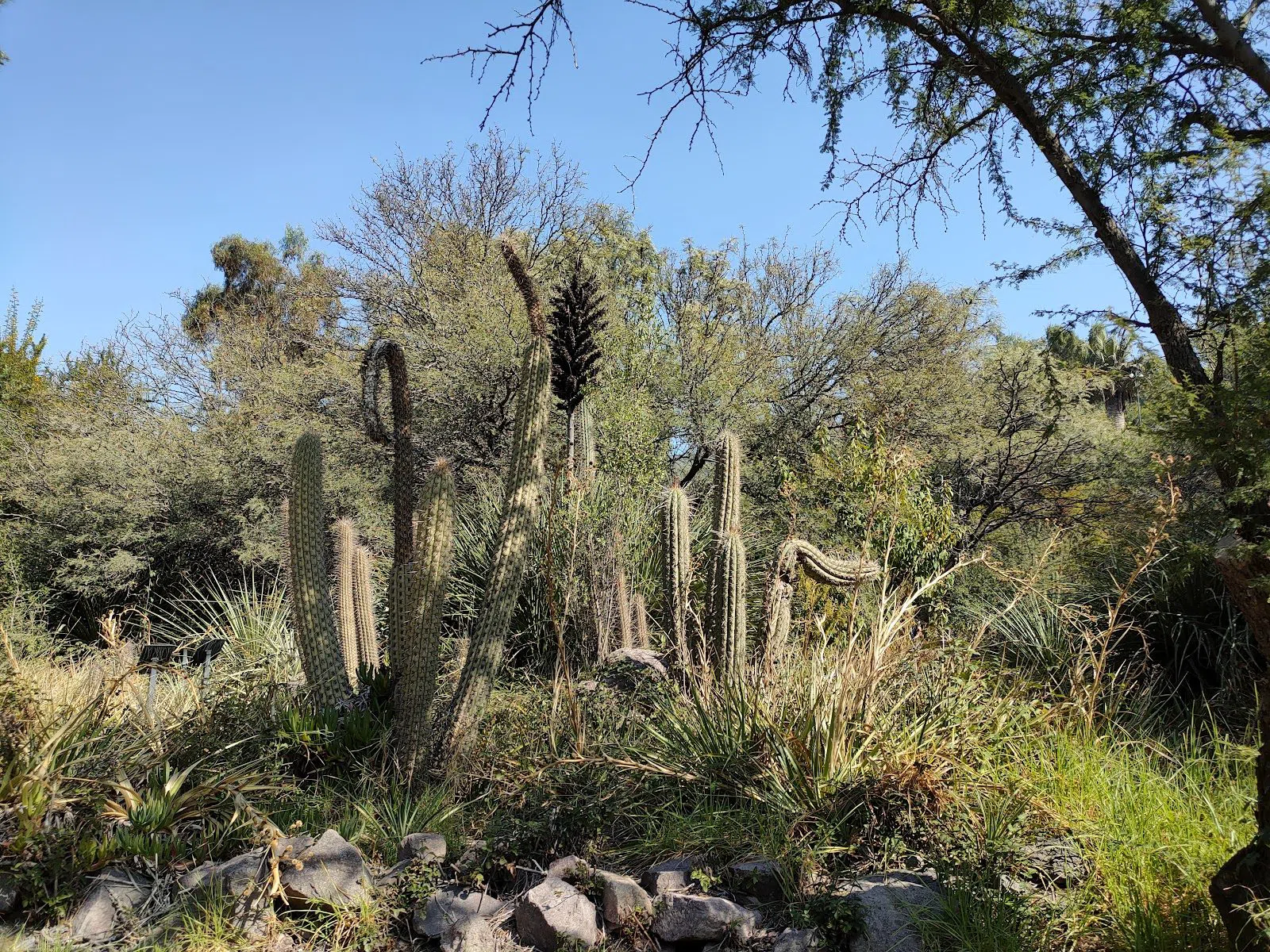
Jardín Botánico Mapulemu opens daily from 09:00 to 18:00, free. Its 4.5 hectares hold Chilean natives along gravel paths around a sloping lawn in a fold of the hill: araucaria, copihue vines and a northern cactus zone. The garden was created in 1983, is accredited by Botanic Gardens Conservation International and was the first in Santiago devoted purely to native flora. Guided native-flora walks run on heritage days. On a weekday you will have it to yourself.
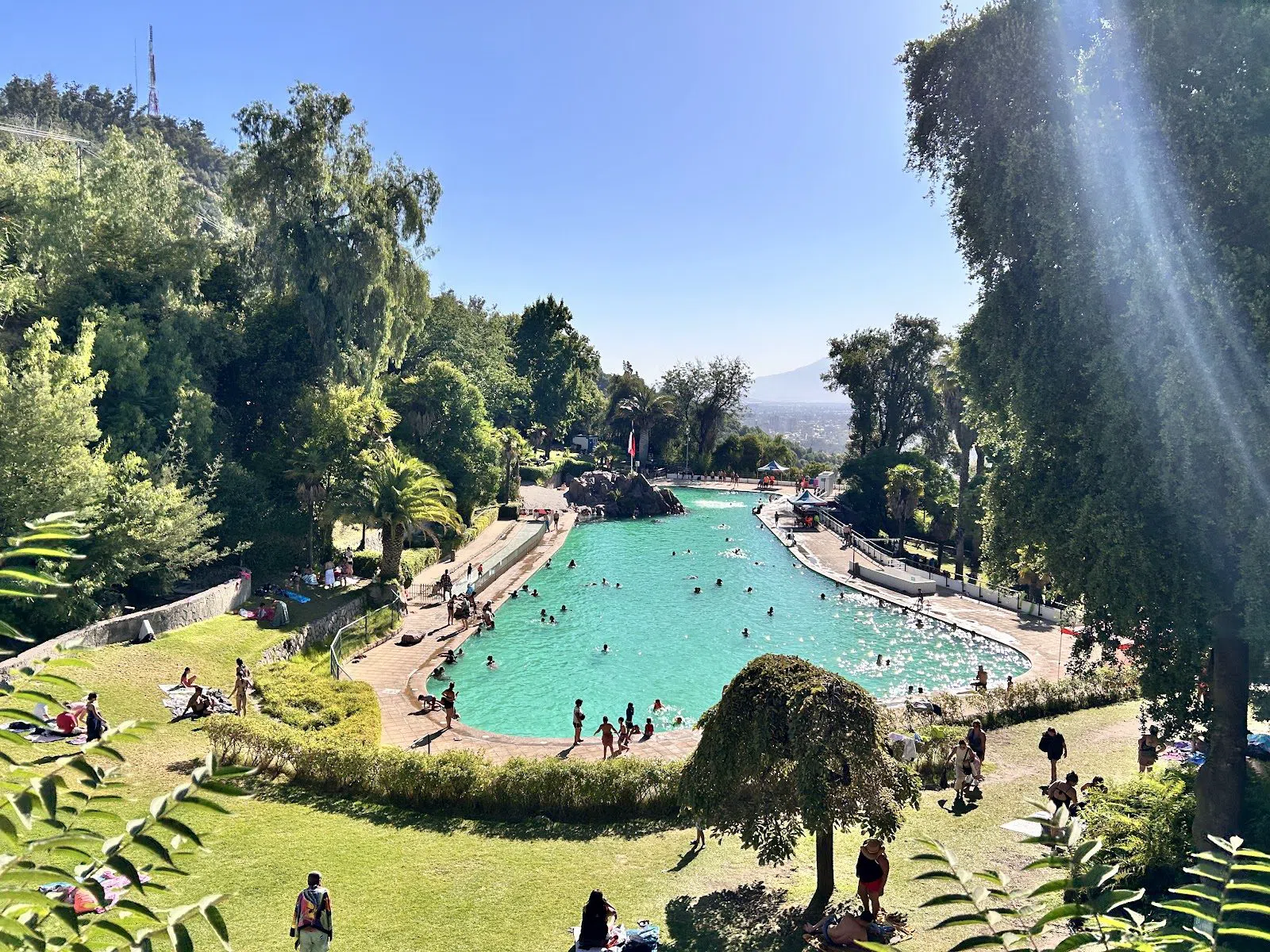
Piscina Tupahue runs in the summer season only. The 2026 season ran from January to 15 March, weekends first and then Tuesday to Sunday. Tickets are $7.000 for adults and $4.000 for children up to 13. Over-60s and disabled visitors plus one companion go free, which brings a mixed-age family in cheap. The long open-air pool is backed by a rough-cut stone wall and pines, with sun terraces stepping down the hillside toward the skyline. Its sister pool Antilén stays shut on structural and water grounds.
Bosque Santiago on the Huechuraba slope
Bosque Santiago (Camino La Pirámide 6000) has a different entrance entirely, via Metro Zapadores. Admission is free and it opens Tuesday to Sunday and on holidays, 10:00 to 19:00. Chile's first open-air environmental education centre is also the park's least-visited corner: lagoons and a planted Valdivian ravine on the back slope, timber boardwalks and bird hides, dry native scrub above. Educator-led routes run Tuesday to Friday and families roam free at weekends. Any group of more than 10 people has to book ahead at [email protected].

Bellavista at the foot of the hill
Casa Museo La Chascona (Fernando Márquez de la Plata 0192) opens Tuesday to Sunday from 10:00 to 18:00, and to 19:00 in January and February. Entry is $11.000, or $4.500 for students and residents aged 60 and over. Neruda built the house in 1953 for Matilde Urrutia while the affair was still secret. The dining room is shaped like a boat and the bar like a ship's cabin, set in a cluster of small blue and ochre houses climbing the hillside, with a water channel running through the garden. Visits are self-guided with audio, first-come and first-served, and no reservations are taken.


Patio Bellavista (Constitución 30–70) is where most people land after coming down the funicular: 20 restaurants and craft stalls in tiled pedestrian courtyards threaded between painted early-1900s houses, lapis lazuli in the shop windows, strung lights over the outdoor tables. Prices run $$. It stays open Sunday to Wednesday until 01:00 and Thursday to Saturday until 03:00. The complex turned 20 in 2026 with a renewed cultural programme, and individual restaurants take bookings.
Terrazas San Cristóbal (Constitución 241) opened in late 2025, a stepped open-air boulevard of 11 restaurants and bars behind restored period facades, with the green bulk of the hill rising directly behind the roofline and views of it from the upper terraces. Prices run $$. Hours are 08:00 to 03:00 Thursday to Saturday and 08:00 to 02:00 Sunday to Wednesday. More than 300 guarded parking spaces and bike racks sit behind it.

Galindo (Dardignac 98) is five minutes from the Pío Nono gate, an old adobe house with bare brick, timber beams and long shared tables. Pastel de choclo arrives in a clay dish and the menus are chalked on blackboards. Prices run $$. It started as a workers' canteen and is still where locals eat cazuela after walking the hill. Busy and no-frills, so go early or wait on the pavement.

What to book and what to turn up for
Guided trips up the hill run seven days a week and book up steadily. Some departures of the most-booked trip are already sold out on 2 November 2026, and other dates are open. Large organised groups using park facilities are asked to book with the park's education team.
How long it takes and the best time to go
Ride up, drink something on the terrace, climb to the sanctuary and come back down, and you have spent a morning. Walk both ways and add a garden and it fills a day.
The gates open hours before either lift starts, and the early part of the morning belongs to people on foot. Tuesday to Friday gives you the whole hill. On a Monday the cable car, the zoo, Jardín Japonés, Bosque Santiago and the museum at the bottom are shut, the funicular starts in the afternoon, and Mapulemu is the one garden still open. The observatory restricts you to a weekend. Summer runs the cable car later into the evening and is the only time the pool takes swimmers; winter stops the lifts earlier and shortens the observatory's hours.
Is it worth it
The climb earns the view, and more so past the terrace to the sanctuary. It suits a visitor with half a day free and legs for a hill, and children need a zoo slot booked before you arrive.
Before you go
Mondays close most of the hill and the funicular shuts on the first Monday of each month. Book a zoo slot for every person in your party, book the observatory's night session ahead, and email the education centre if you are coming as a group.
See the Santiago guide and the Santiago hotel search.
Antes de ir
What does it cost to go up Cerro San Cristóbal?
The Parque Metropolitano de Santiago charges nothing at the gates, so walking in is free. The funicular is $1.610 one way and $2.300 return Tuesday to Friday, $2.990 at weekends and on holidays. The cable car starts at $3.150 one way and $4.050 return, and the Vive el Parque pass from $11.500.
Do I need to book the zoo in advance?
Yes, the Zoológico Nacional de Chile is free, but reservation-only through reservas.parquemet.cl/zoologico, and every visitor needs their own slot, so groups that walk up get turned away. It opens Tuesday to Sunday, 10:00 to 18:00.
Is anything open on a Monday?
The park gates (06:00 to 20:30) and Jardín Botánico Mapulemu (09:00 to 18:00) are open daily. The funicular runs from 13:00 on Mondays, except the first Monday of the month, when it closes for maintenance. The cable car, the zoo, Jardín Japonés, Bosque Santiago and Casa Museo La Chascona are all shut on Mondays.
How do I avoid the funicular queue?
Take the cable car instead. The Pío Nono line opened on 24 March 2026, covers 1 km in 7 minutes and is usually the quieter way up. Walking the asphalt road from 06:00 avoids both lifts, which do not open until 10:00.
Can I visit the observatory on the summit?
Observatorio Astronómico Manuel Foster is open Saturday and Sunday, 12:00 to 18:00 in summer and 11:00 to 17:00 in winter. Walk-in tickets are $2.000 general, $1.000 reduced and free for under-12s. Night sessions are $15.000 and $10.000, with limited capacity, and must be booked ahead. A US-funded restoration of the dome and telescope began in late 2026, so check it is open before making the trip for it.