Pablo Neruda didn't build houses so much as moor them — every room he owned reads like a ship's cabin dressed for a party, crammed with glass fishing floats, figureheads, and maps of oceans he never fully crossed. Two of his three houses survive as museums outside the city; only one sits inside Santiago itself, and being upfront about that distinction — rather than pretending all three cluster conveniently downtown — is the first thing worth knowing before planning the day. This is a piece about pilgrimage with logistics attached: what's walkable, what's a day trip, and what a reader with one afternoon versus three days should actually do.
La Chascona: The House Santiago Actually Has
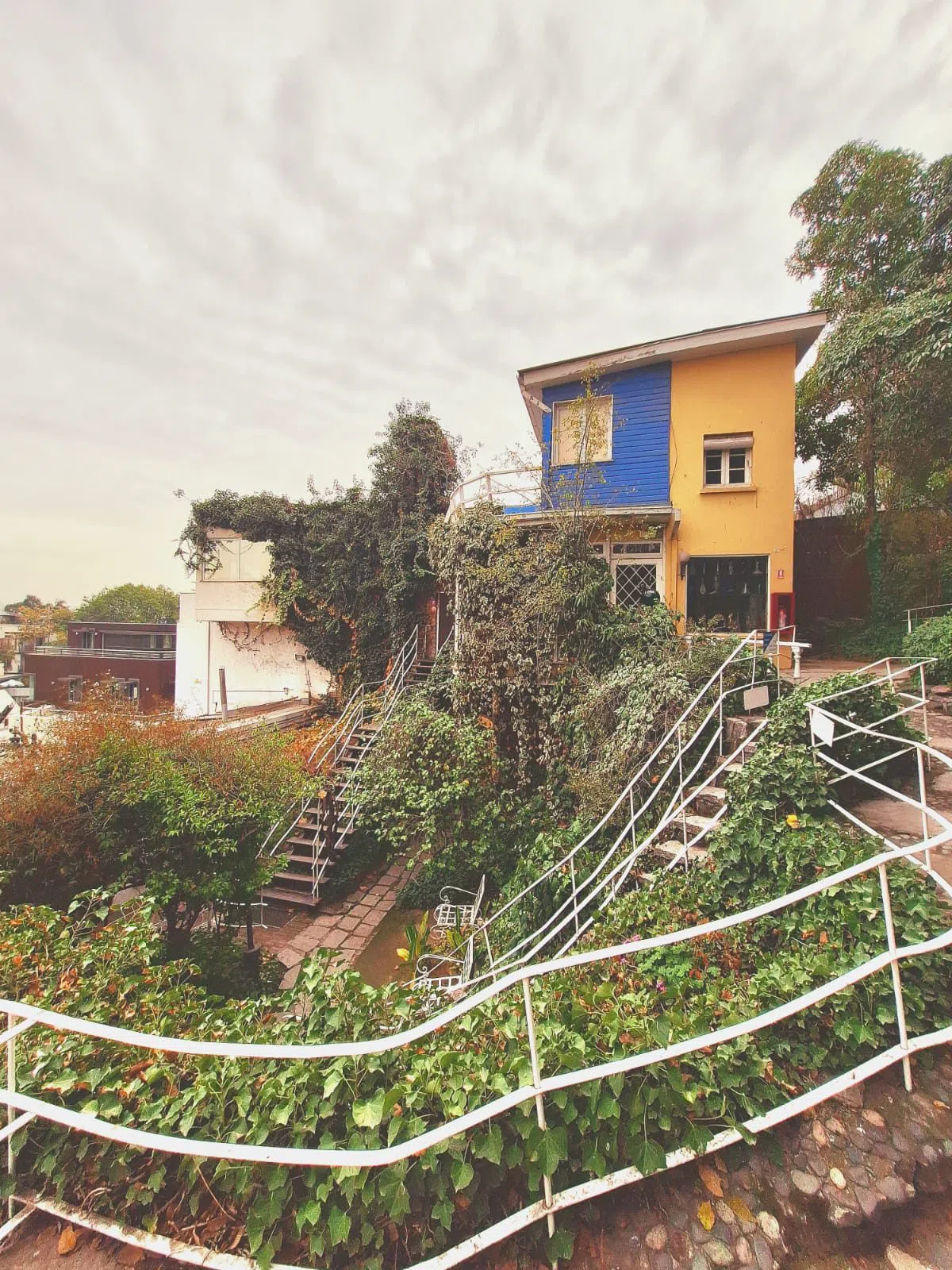
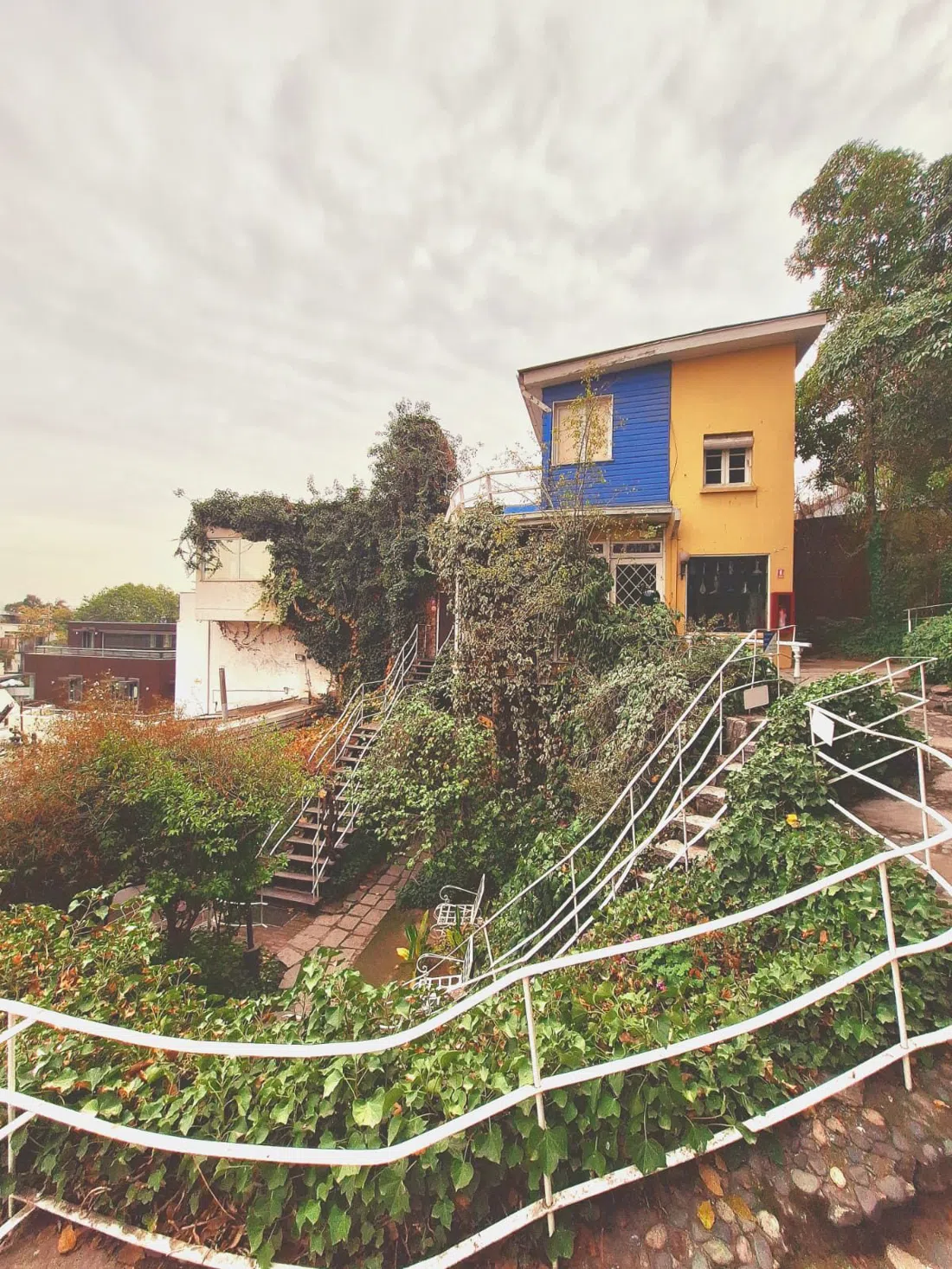
La Chascona (Casa Museo Pablo Neruda), tucked into the hillside streets of Bellavista beneath Cerro San Cristóbal, is the only one of Neruda's three houses that sits inside Santiago proper — everything else on this list involving a "house" is a day trip. He built it in secret in the 1950s for Matilde Urrutia, the woman who became his third wife, naming it for her wild red hair (chascona is rough Chilean slang for "tangled-haired"). It's not one building but three, staggered up the slope and connected by outdoor stairs, because Neruda liked to build the way he wrote — in fragments that only make sense once you've walked through all of them.
Entry is by fixed-slot audio guide, available in English and Spanish, and the rooms are genuinely small — this is a house, not a palace, and it was never meant to hold crowds. As of 2026, general admission runs roughly CLP 8,000–9,000 with the audio guide included, and anyone bringing a group over about ten people should pre-book through the Fundación Neruda's website rather than showing up and hoping; staggered entry through those narrow rooms means the foundation manages numbers carefully. Couples and solo travelers can generally walk up and buy a same-day slot outside peak season, but book ahead in Chilean summer (December–February), when Bellavista is busy with both tourists and Santiago residents on holiday.
Budget 60–90 minutes. The house rewards slow walking — Neruda's collections of ships-in-bottles, salvaged French windows, and a bar built like the prow of a boat all sit in rooms meant to be lingered in, not strode through.
What's Two Minutes Away
Two details make La Chascona worth building an afternoon around rather than a single ticket.
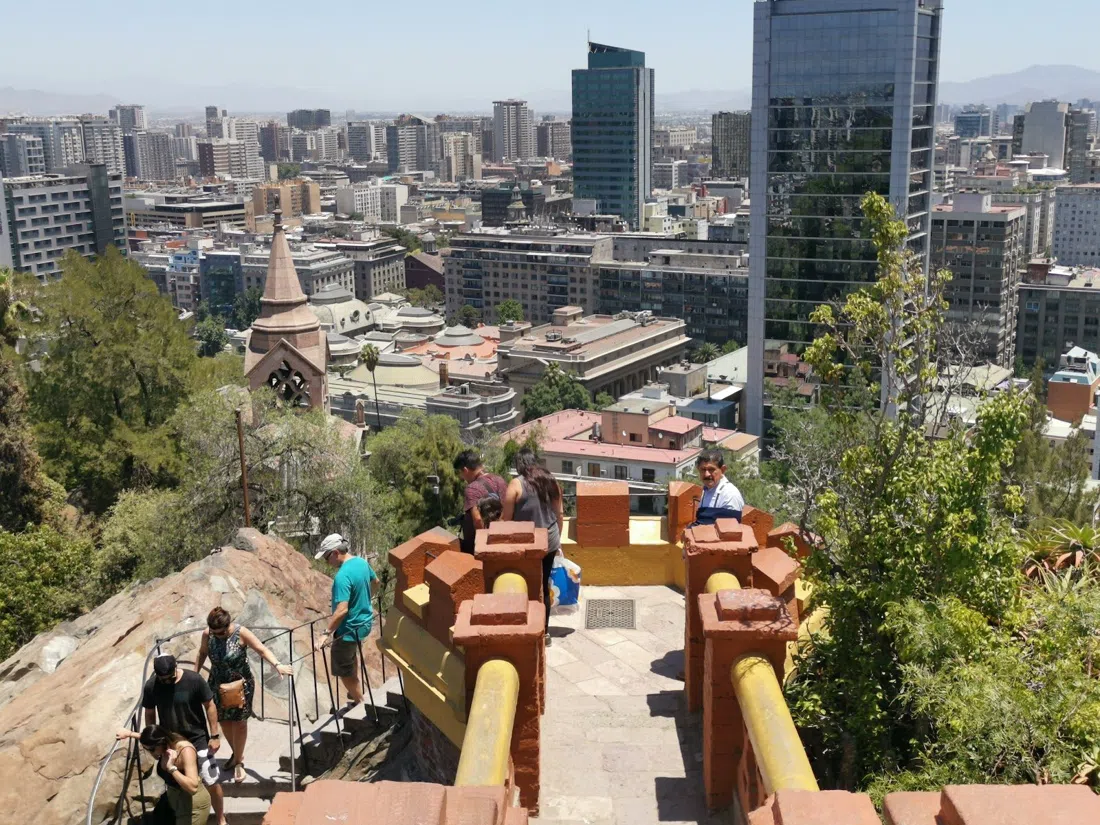
The house is built directly against Cerro San Cristóbal & the Bellavista Funicular, literally the hill Neruda woke up to and wrote under for years. The funicular runs continuously and handles groups with no booking required, a round trip costing roughly CLP 4,500 on weekdays and CLP 5,850 on weekends. It's the best wide shot available for understanding Neruda's Santiago: from the top, Bellavista's tiled roofs sit below you much as they would have from the poet's windows, with the Andes doing the rest. Go up after the house, not before — the museum makes more sense once you've seen the view he was writing toward.

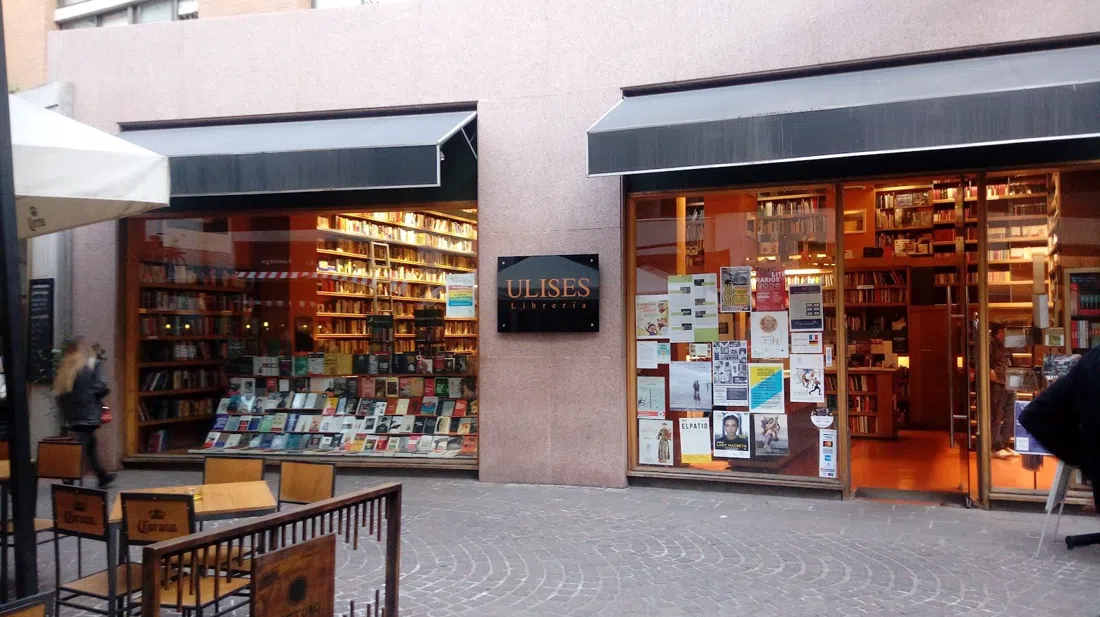
At the bottom of the hill, barely two minutes' walk from La Chascona's entrance, Librería Ulises is the natural next stop — a small independent bookshop in Bellavista, informal enough that it isn't a booking venue at all, just somewhere to wander in with a group or alone. It's the obvious place to buy Neruda in the original Spanish or in translation once you've stood in the rooms he wrote in; books start around CLP 8,000. There's no ceremony to it — browse, buy, move on.
The Other Two Houses: Valparaíso and the Coast
Any piece that promises "three houses" and delivers only one is cheating the reader, so here's the honest version: the other two are outside Santiago, and treating them as day trips rather than pretending they're city stops is the right call, not a compromise.
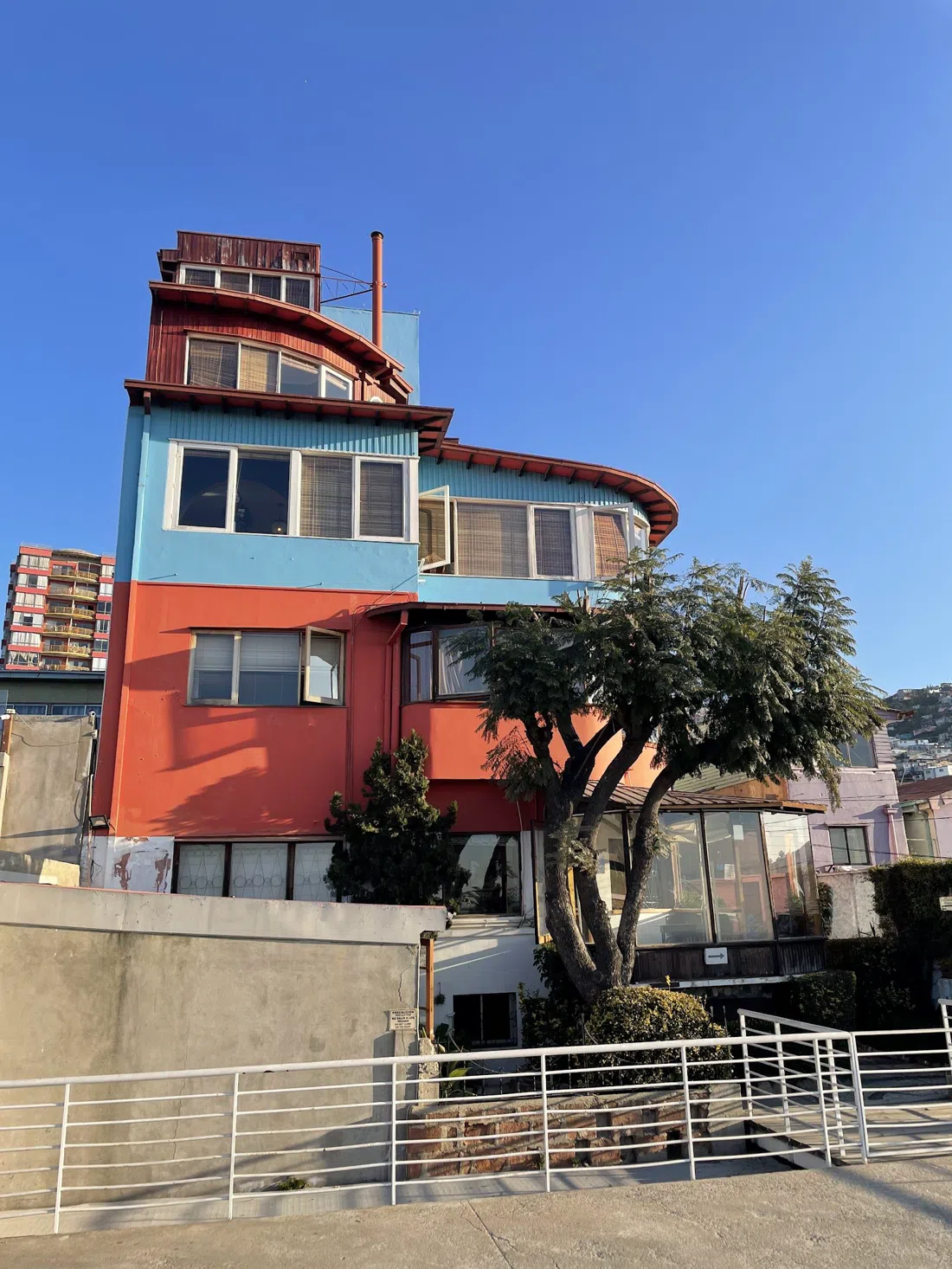
La Sebastiana, in the port city of Valparaíso about 90 minutes from Santiago by car or bus, is arguably the most purely joyful of the three houses — Neruda bought it for the view over the harbor and filled it with the same magpie collecting instinct as La Chascona, but with more room to spread across five narrow floors. Entry is by timed audio guide and, usefully for a spontaneous day trip, no reservation is required — turn up, get a slot, and go. The catch is the building itself: floors are narrow and stairs frequent, so larger groups should call ahead rather than arrive as a single mass of fifteen people. Admission sits in the same CLP 8,000–9,000 range as La Chascona. Pair it with a walk through Valparaíso's hills — the city's own tangle of funiculars and street art means the house isn't the only reason to make the trip, which takes some pressure off getting the timing exact.
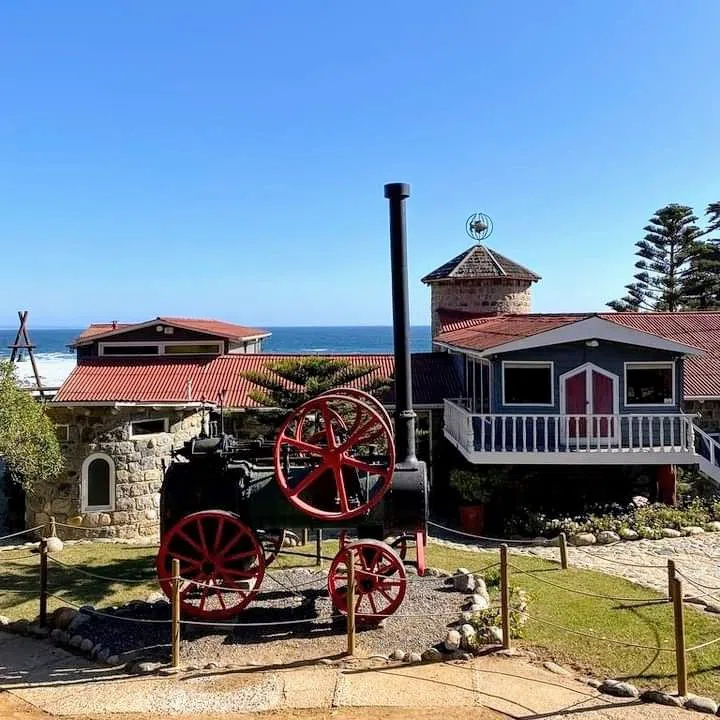
Casa de Isla Negra, on the coast south of Valparaíso, is the house that makes Neruda's love of the sea literal rather than metaphorical — ships' figureheads facing the water, a house shaped like a vessel run aground, and, in the garden, the poet's actual grave alongside Matilde's, both facing the Pacific he wrote about obsessively. It's first-come entry with capacity limits, and queues in peak season can run long, so this is the one house on the list where showing up without a plan costs real time. The practical fix is one of the small organized day tours running from Santiago — typically groups of around eight — which bundle transport with a scheduled entry slot; these run roughly CLP 50,000–75,000 for the day, on top of the CLP 8,000–9,000 entry fee. If the piece's promise is "the emotional close of the pilgrimage," this is genuinely it: it's where Neruda is buried, and no photograph of the other two houses quite prepares you for standing where he chose to end up.
Realistically, seeing all three houses means either a long single day (an early Santiago start, Valparaíso and Isla Negra back to back, home late) or splitting them across two days with a Valparaíso overnight. Either works; trying to also fit in the rest of this list on the same day does not.
Making the Sea Real Without Leaving Santiago
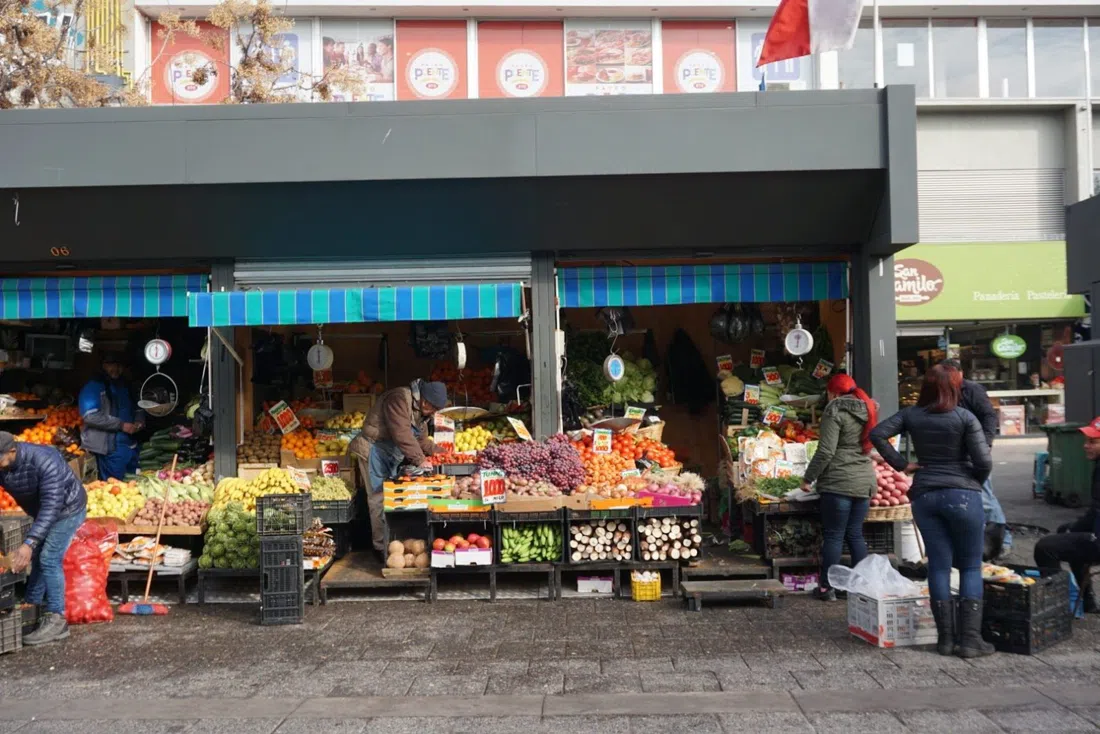
Not every reader will make it to the coast, and for them there's a way into the same theme — Neruda's obsessive love of the sea and of Chilean seafood — without leaving the city. Mercado Central, Santiago's covered seafood market in the city center, is where his ode to conger eel chowder ("Oda al Caldillo de Congrio") stops being poetry and starts being a menu. It's an easy market for groups to navigate, though the advice is to go before 1pm — stalls thin out through the afternoon and some close early on quieter days. Browsing the market is free; a proper seafood lunch at one of the surrounding restaurants runs roughly CLP 15,000–25,000. It's not a Neruda site in the way the houses are, but for a piece built around his relationship with the ocean, it earns its place — and it's the only "sea" stop that doesn't require leaving the city limits.
The City of Two Poets: Santiago's Wider Literary Trail
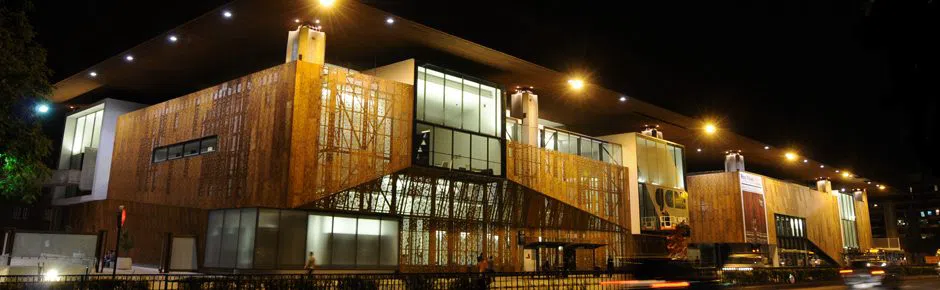
Neruda wasn't Chile's only Nobel laureate in literature, and a piece that only tells his story misses how much Santiago's literary culture is a two-poet city. GAM — Centro Cultural Gabriela Mistral, downtown on the Alameda and named for the poet who won the prize two decades before Neruda, is the natural counterpoint stop: a large modern cultural center that handles crowds easily, free to enter with individual ticketed events depending on what's on that week — check the calendar ahead, since halls and programming vary by show.
For something quieter, the Biblioteca Nacional de Chile, also downtown, holds Neruda manuscripts and first editions in its archive, and offers free guided tours on request; group visits can be arranged with a bit of prior notice. It's the scholarly version of the pilgrimage — less atmosphere, more actual paper — and a good fit for readers who want to see the handwriting rather than the houses.
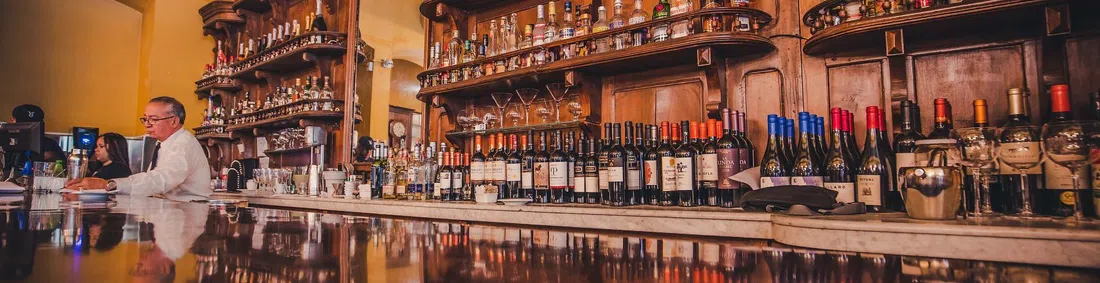
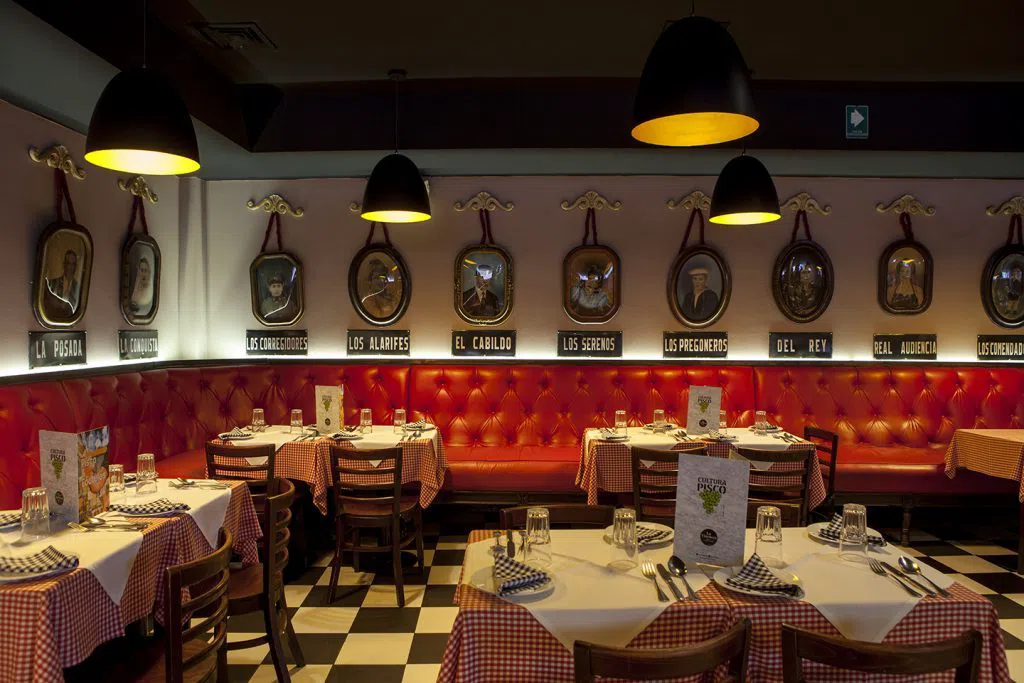
Two rooms round out the picture of the bohemian Santiago that produced Neruda's generation, without being Neruda sites themselves. Confitería Torres, one of the city's oldest surviving literary cafés, took reservations and groups at its historic downtown location and is exactly the kind of room where his contemporaries actually gathered over coffee and pisco sours; note it's closed Sundays there, so plan around that. Mains and sandwiches run in the $$ range. Bar Liguria, with multiple locations around Santiago, is the louder cousin — a proper bohemian institution that takes reservations and groups but can get loud and packed on weekend nights, so it suits an evening group outing more than a quiet couple's stop. Mains plus pisco sours also sit in the $$ bracket. Neither is a place to look for Neruda memorabilia; both are places to understand the drinking culture his circle actually lived in.
Finally, Cerro Santa Lucía, downtown and Santiago's founding site, is one of the city's best-loved green hills and makes a good bookend for the day, whether you start here before heading to Bellavista or close the whole pilgrimage here at dusk. It's free, open, easily handles groups, and the gates close in the evening, so check closing time if planning a sunset visit rather than treating it as available all night.
Planning the Route
For a reader with a single day in Santiago and no coastal trip: start at Cerro Santa Lucía or head straight to Bellavista, tour La Chascona, ride the funicular up San Cristóbal, drop into Librería Ulises, have lunch at Mercado Central, and close with either Confitería Torres or Bar Liguria depending on whether the evening calls for quiet or noise.
For a reader building the full three-house pilgrimage: treat La Chascona as day one alongside the city stops above, and give Valparaíso and Isla Negra their own day — ideally starting early, since Isla Negra's first-come entry rewards arriving before the tour buses.
Practical Notes
Getting there: La Chascona, GAM, Biblioteca Nacional, Confitería Torres, Bar Liguria and Cerro Santa Lucía are all reachable by metro, on foot from downtown, or by short taxi/rideshare — Bellavista in particular is a walking neighborhood once you're in it. Valparaíso and Isla Negra require a car, an organized tour, or a long-distance bus from Santiago's main bus terminals; there's no train option. If staying centrally, browse this Santiago hotel search for something within walking distance of both Bellavista and the metro line out toward the bus terminals.
Cash: Most house museums, the funicular, and market stalls take cards, but small change in Chilean pesos smooths queue lines at the funicular and covers small purchases at Librería Ulises — carry some.
Timing: Chilean summer (December–March) means longer queues and a real need to pre-book La Chascona for groups; Chilean winter (June–August) is quieter but colder and wetter, and Isla Negra's coastal wind is worth a jacket even in shoulder season. Mercado Central is a lunch stop, not a dinner one — go before 1pm.
Budget: Reckon on CLP 8,000–9,000 per house museum, CLP 4,500–5,850 for the funicular round trip, CLP 15,000–25,000 for a Mercado Central lunch, and CLP 50,000–75,000 on top of entry if booking an organized Isla Negra day tour rather than driving yourself. None of it is expensive by international city standards; the real cost is time, particularly when trying to fit all three houses into one trip. For the wider rundown on where to base yourself and what else the city offers beyond Neruda, the Santiago guide has the full picture.