 In this area
The Santiago issue
Barrio Yungay, Santiago: murals, cités and the city’s oldest grid
A slow, low-rise Santiago barrio of murals, heritage cités, and honest eating, where the city’s first planned neighbourhood still feels lived in rather than curated.
By Matías FuenzalidaMercado Central to a Maipo Cabernet
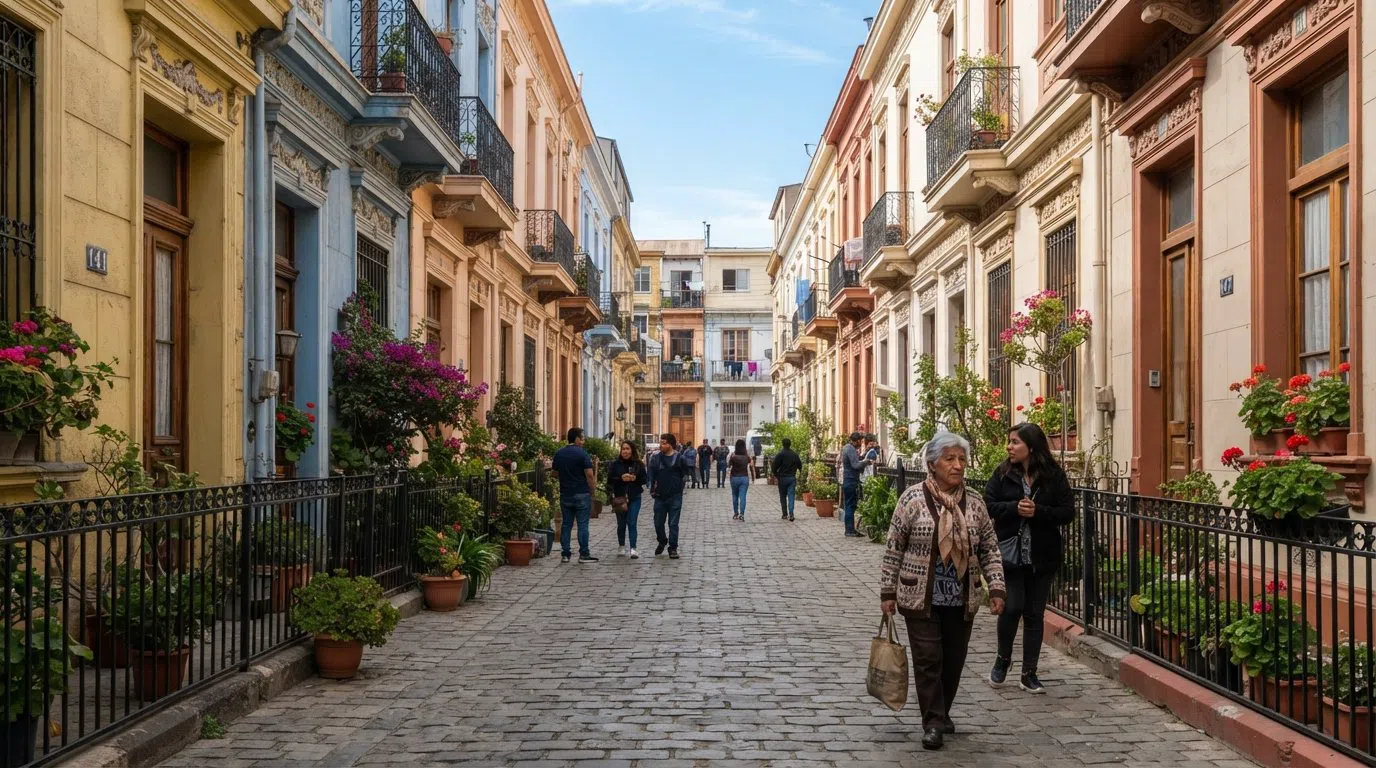
Santiago drew up its first planned neighbourhood here in 1839, and you can still feel the city deciding what it wanted to be. In Barrio Yungay the streets stay low, the cornices sit at eye level, and the walls keep up a running conversation in paint: pensions, memory, the Pinochet years, cacerolazos, poets, martyrs. The barrio does not perform heritage so much as wear it, a little creased at the cuffs. One block holds a barbershop from 1868 that became a restaurant; the next, a sanguchería still slices pork loin by family recipe. That is the trick of Yungay. It is old without being embalmed, bohemian without the self-congratulation, and stubbornly residential in a city that often prefers to flatten its past and build a tower on top.
What Barrio Yungay is known for
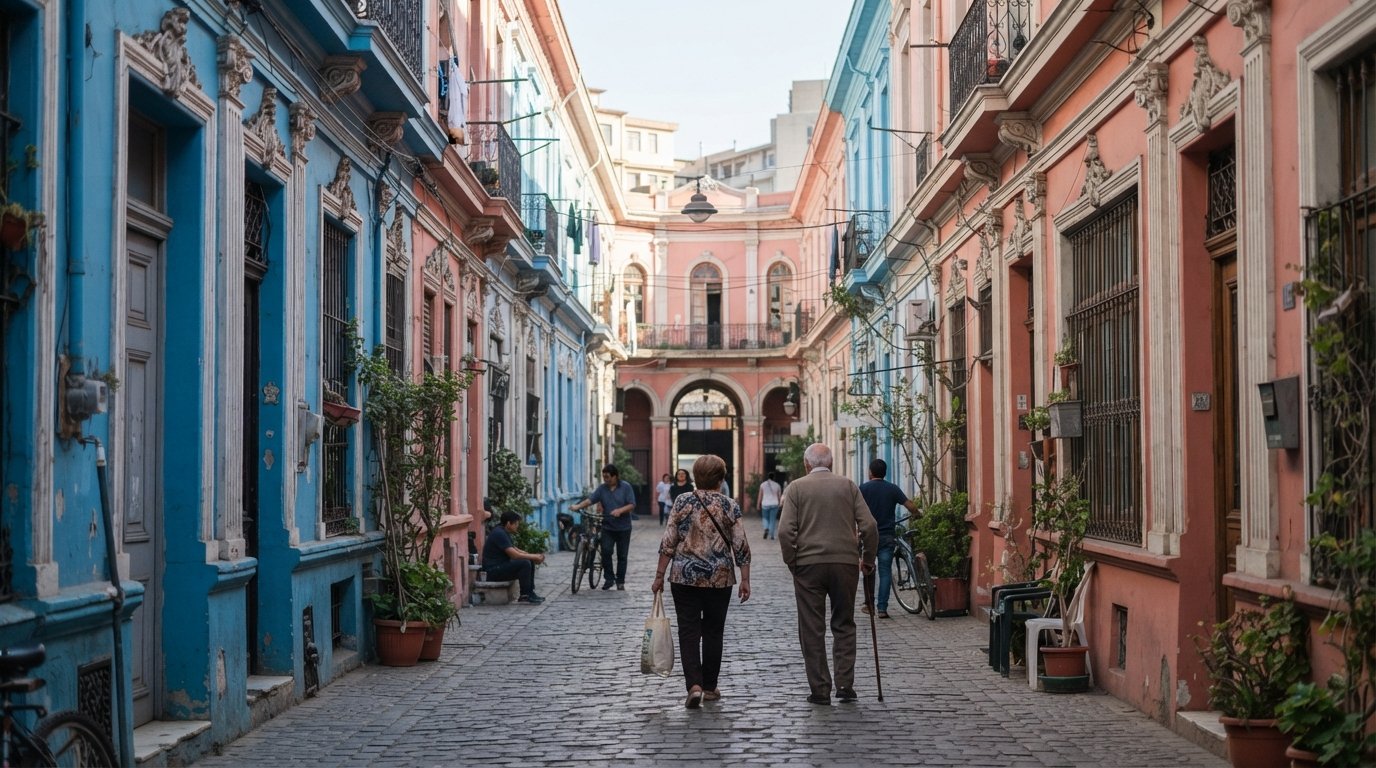
Yungay is Santiago’s oldest surviving heritage barrio and its most self-consciously bohemian one. The grid itself is part of the pleasure: you walk it and feel a 19th-century city still doing its job. Neoclassical facades, Belle Époque flourishes, adobe colonial houses, and the cités that give the neighbourhood its signature all sit close together, as if the city had decided to keep its options open. The cités are the real revelation for first-timers: narrow communal passages that open into shared courtyards, domestic and public at once, with the kind of intimacy modern developers usually try to price out.
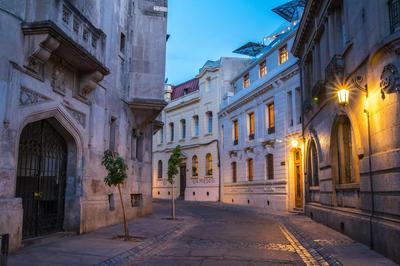
The prettiest of them is Pasaje Adriana Cousiño, with facades painted cerulean blue and salmon pink, a colour scheme that looks almost cheeky against Santiago’s usual brick-and-cream reserve. Nearby Pasaje Hurtado Rodríguez and Calle Lucrecia Valdés keep the same low, quiet line. The effect is not precious; it is lived in. Laundry hangs, doors open, people come and go. You feel that this is housing first and heritage second, which is exactly why the place works.
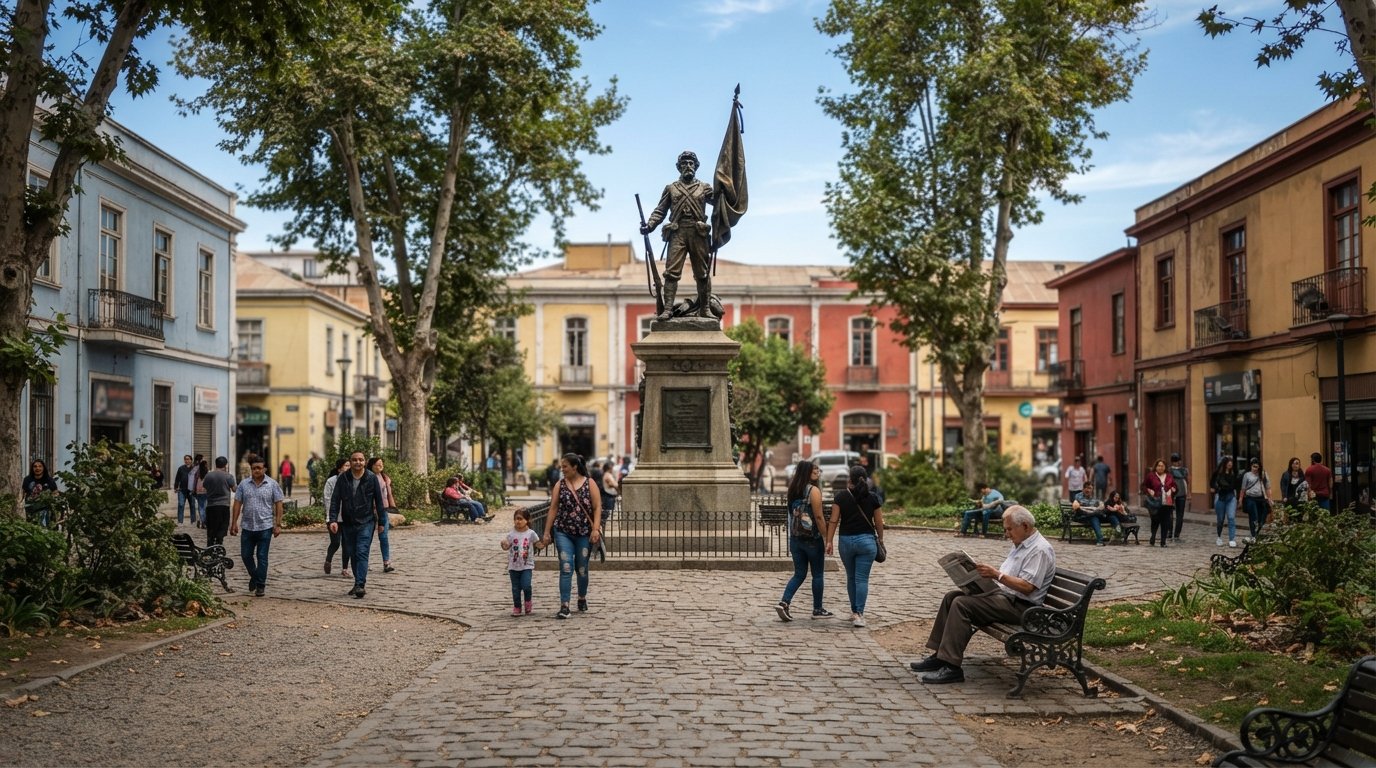
The murals tell you what sort of neighbourhood this is. They are not decorative wallpaper for brunch; they are arguments in public. Gabriela Mistral appears on walls here, as does Ana González de Recabarren, the Yungay local and human-rights activist whose face carries the weight of memory without needing much explanation. Víctor Jara turns up too, and so does the cacerolazo, that balcony protest of banging pots and pans, which feels about right for a barrio that has always understood noise as civic language. At the centre of it all, Plaza Yungay holds the bronze Monumento al Roto Chileno, a monument to the ordinary Chilean commoner-soldier and, by extension, to the working-class identity the neighbourhood still wears with pride.
That working-class pride matters. Yungay is not an immaculate heritage set piece. Pensioners buy bread on Compañía de Jesús, students spill out of collaborative studios in old mansions, and the neighbourhood keeps a real mix of residents and reasons for being here. Preservation won a battle against demolition and helped secure the core as a protected Typical Zone in 2009, but the victory did not freeze the barrio. It simply bought it time.
Plan your Santiago trip
Live prices from our booking partners.
Guests & rooms
Free cancellation on many rooms. We may earn a commission when you book.
Where to eat & drink
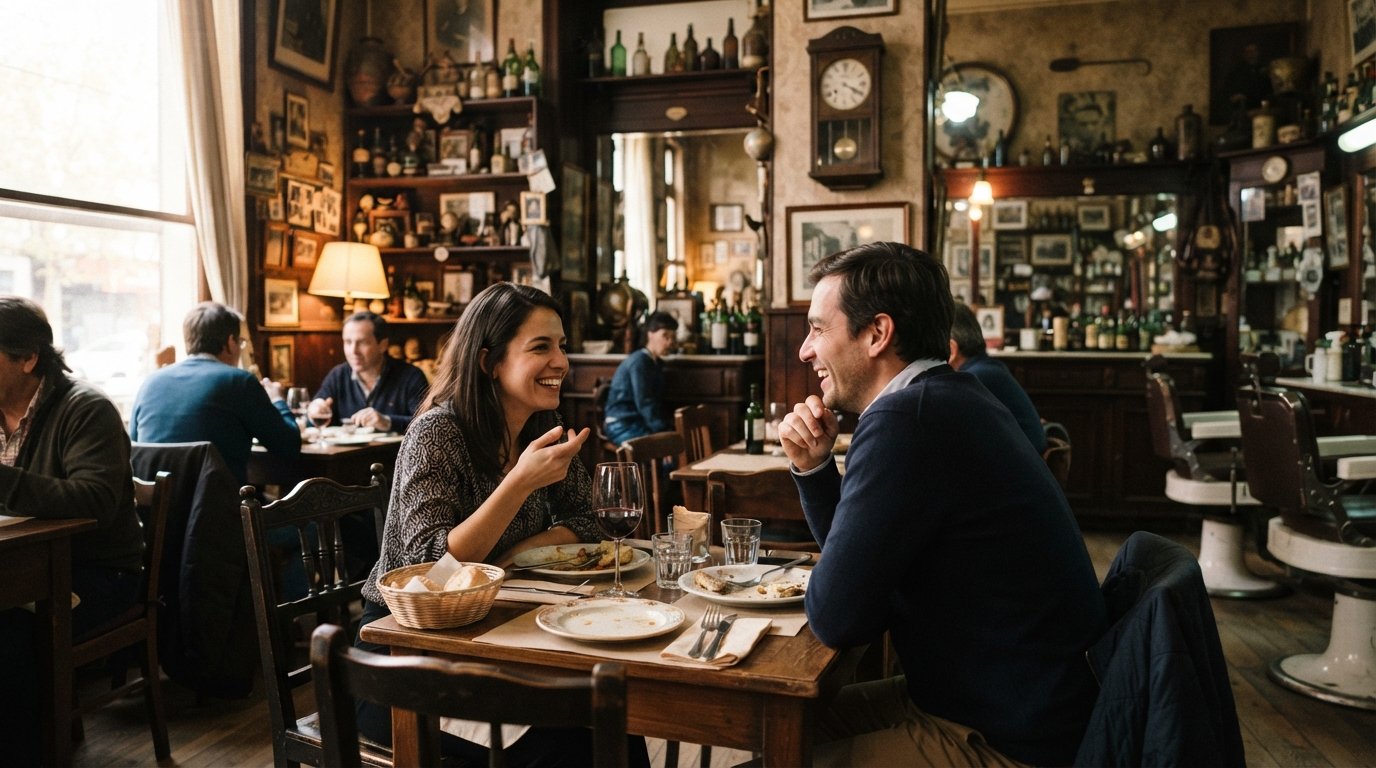
Yungay eats better than its scruffy reputation suggests, and it does it without much fuss. The landmark, and the place to begin if you want the barrio in one sitting, is Peluquería Francesa on Boulevard Lavaud, Compañía de Jesús 2789. It started as a barbershop in 1868, then expanded into a restaurant, bar and house museum, and the rooms still look as if they have been accumulating stories, furniture and slightly eccentric taste for more than a century. Antiques are everywhere, and many are for sale, which gives the whole place the atmosphere of a house where the family has one eye on memory and the other on the till. The kitchen leans French-Chilean: oysters, French onion soup, duck, coq au vin, Patagonian lamb shank. It stays open past midnight on weekends, so the room can slide from lunch to late drinks without changing its manners.
If Peluquería Francesa is the grand old theatre, Fuente Mardoqueo at Libertad 551 is the neighbourhood’s great practical joke on hunger. Since 1989 it has been building enormous sandwiches, and the one to order is the Lomito Bávaro, thin-sliced pork loin made to a family recipe. The room feels like a junk-shop museum, and there is a serious craft-beer list if you want to turn lunch into a longer argument. It is the sort of place that reminds you that a good sandwich can be more convincing than a tasting menu, especially when the sandwich is the size of a small civic project.
Espacio Gárgola, at Maipú 357, takes a different route altogether. It fills a 1920 mansion with an art gallery, an antiques store and a restaurant, which is either a lot of functions for one house or exactly enough, depending on your appetite for clutter with intent. Its Súper Chorrillana is the kind of plate that arrives with a warning from the table next door: fries, meat, chicken, shrimp and four eggs, built to feed five. That is not a dish you order lightly, and perhaps that is the point. Yungay is full of places that still understand appetite as a social event.
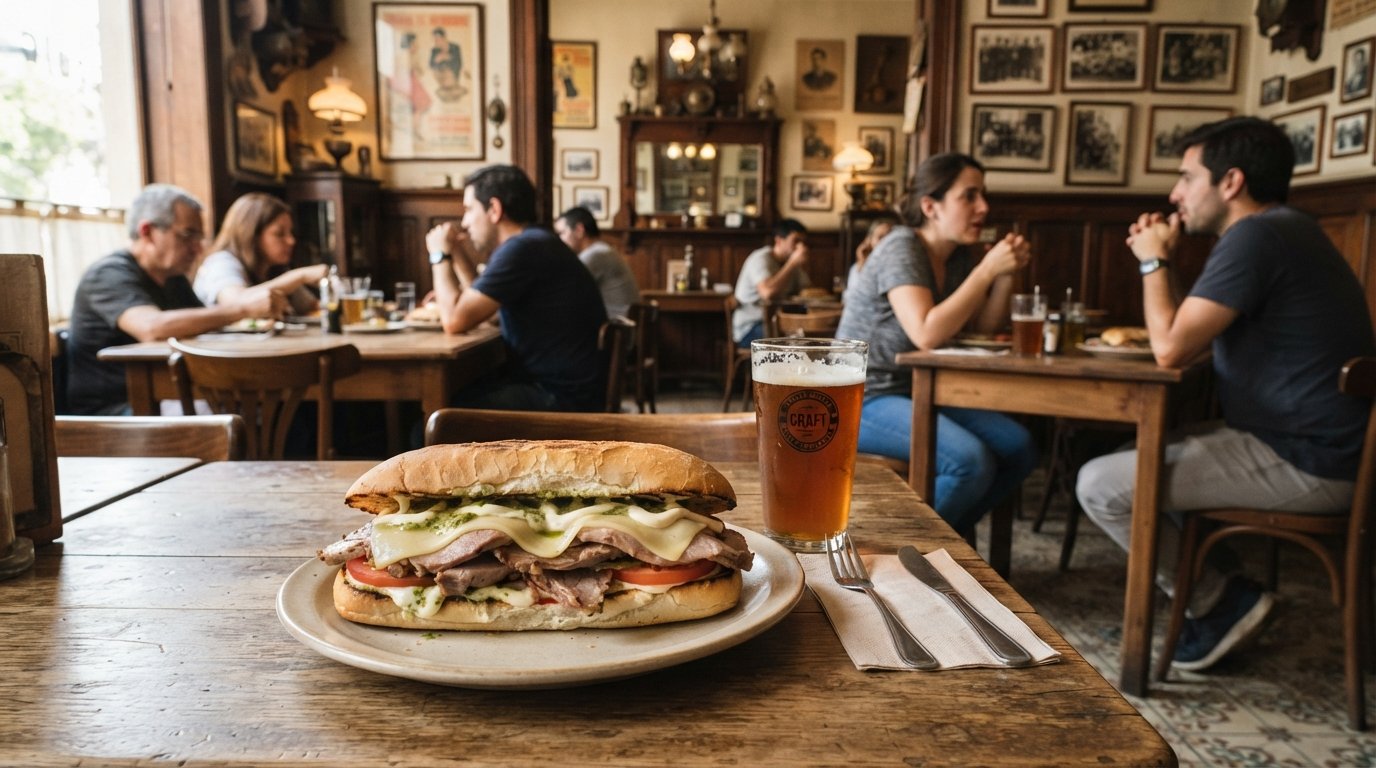
For coffee, Cité Café at Compañía de Jesús 2820 is the specialty anchor, doing flat whites, cold-brew mocktails and sourdough brunch inside a restored heritage building that opens onto a rooftop with barrio views. It is the kind of place that could have become smug and did not, perhaps because the neighbourhood around it keeps everyone honest. Café Yungay trades on a quieter kind of charm, pairing good coffee with shelves of local bibliography, which is a very Yungay way to spend an afternoon: caffeinated, a little studious, and not in a hurry. And in the pastel passage of Pasaje Adriana Cousiño, Tetería Cleopatra is a genuinely unusual tea house, with dozens of loose-leaf infusions, cakes and vegan-friendly sandwiches, plus resident cats who behave as if they own the lease.
Going out
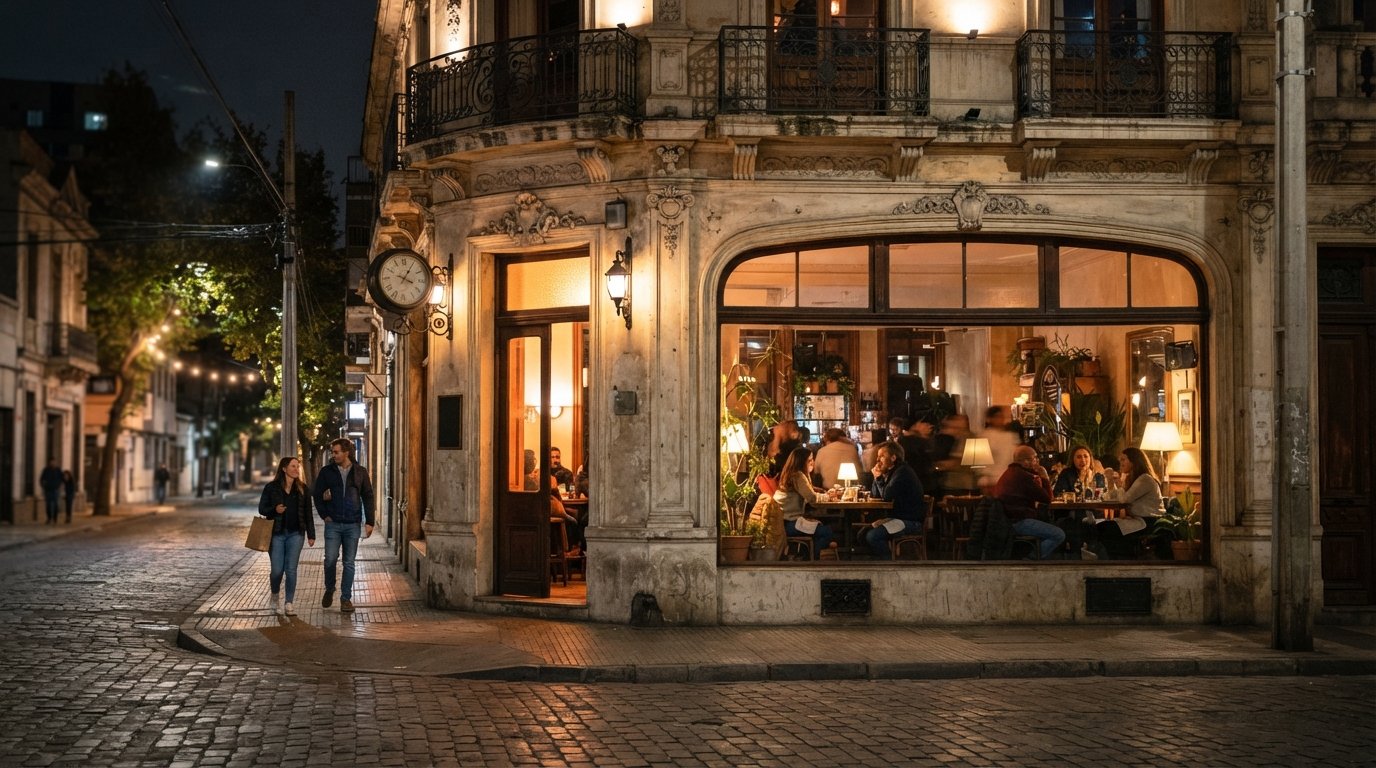
Yungay is not a nightlife barrio, and that is part of its appeal. No one comes here to be seen doing shots under a neon sign. The evenings are low-key and local: a late dinner and drinks at Peluquería Francesa, whose bar keeps going until the small hours on Fridays and Saturdays, or a craft beer over a sandwich at Fuente Mardoqueo. The energy is conversational rather than clubby, the sort of night where you can still hear the room thinking.
That said, the city’s more boisterous moods are close enough to borrow. Barrio Brasil, immediately adjacent, has the affordable bars, live music and student crowd around Plaza Brasil and Avenida Brasil, and the two barrios blur together at their edges. Bellavista is a short taxi or metro ride away if you want a rowdier scene. The beauty of sleeping in Yungay is that you can have a proper evening elsewhere and then come back to streets that have gone back to being themselves.
Things to do / what to see
The barrio itself is the main attraction, which is a relief in an age when every district feels obliged to invent a “must-do” to justify its existence. Here the pleasure is in walking slowly. Start at Plaza Yungay and the Monumento al Roto Chileno, then thread the quiet passages of Pasaje Adriana Cousiño and Pasaje Hurtado Rodríguez. Keep an eye on the walls. The murals are part of the street plan here, not an accessory.
Several small guided street-art walks run through the barrio if you want the stories behind the paint, but you do not need a guide to understand the basic proposition: Yungay remembers out loud.
The free museums make the case for lingering. The Museo de la Educación Gabriela Mistral, at Compañía de Jesús 3150, is housed in an 1886 former teacher-training school two blocks from Quinta Normal metro. It tells the story of Chilean schooling and the Nobel poet’s legacy across more than 6,500 objects, and entry is free. It opens Monday to Friday from 10:00 to 17:00 and Saturday from 10:00 to 16:00. That is a lot of history for no money, which is one of the better deals in Santiago.
Just west of the barrio, the Museo de la Memoria y los Derechos Humanos at Matucana 501 is a powerful, difficult and free account of the 1973-1990 military dictatorship. Allow two to three hours. It opens Tuesday to Sunday, 10:00 to 18:00. It is not an easy visit, nor should it be. The building does the work of insisting that memory be more than a slogan.
Right beside it, Quinta Normal is Santiago’s oldest public park, founded in 1841. It gives you shady trees, a lagoon with paddle boats and the Museo Nacional de Historia Natural. After the density of the murals and the museums, the park feels almost old-fashioned in the best way: open space, water, families, a place to sit with your thoughts and a sandwich.
Don’t miss in Barrio Yungay
The moving Museo de la Memoria y los Derechos Humanos
The historic Peluquería Francesa barber shop and restaurant
Colorful residential facades along Calle Companía
Shopping & markets
Shopping in Yungay is small-scale and characterful rather than a retail circuit, which is another way of saying you are not here to rack up bags. The most enjoyable browsing is inside the gallery-restaurants. Espacio Gárgola doubles as an antiques and design store, with author-made furniture, jewellery and curios laid out between the tables, and Peluquería Francesa sells much of the vintage bric-a-brac that decorates its rooms. That is the sort of retail logic I trust: if you like the chair, ask about the chair.
On weekends, Plaza Yungay hosts pop-up markets of food, crafts and art. They suit the square’s role as the barrio’s social heart: nothing too polished, just enough bustle to remind you that this is a neighbourhood with residents, not a backdrop. If you want a proper flea-market treasure hunt, the sprawling Persa Bío Bío lies a metro ride south of the centre and is worth a weekend morning for antiques, vinyl and vintage. Come to Yungay for one-off finds and neighbourhood browsing, not for chain stores or malls, which sit in Providencia and Las Condes across town.
Where to stay in Barrio Yungay
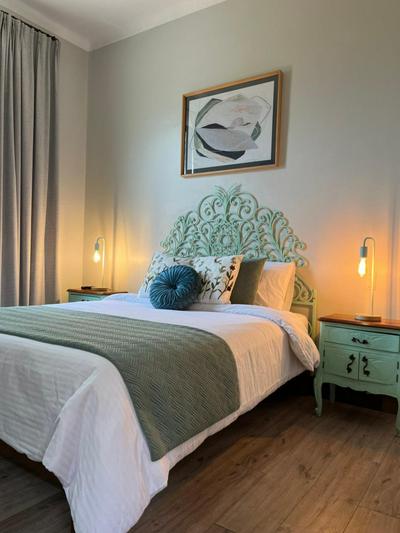
Yungay is a budget-and-boutique-guesthouse district, not a hotel strip, which is exactly why it suits travellers after atmosphere and value. Expect small independent hotels, hostels and heritage guesthouses in converted old houses rather than international chains, at prices well below Lastarria or Las Condes. The quieter, more residential blocks around Plaza Yungay and the cité passages are the most pleasant to sleep in; staying within a few blocks of Compañía de Jesús keeps you close to the cafés and the two metro stations.
If you want polish, five-star comfort or a rooftop pool, base yourself in Providencia or El Golf and visit Yungay by day. If you want to wake up in the real, low-rise, mural-covered Santiago and walk to breakfast, this is the place.
Hotels in Barrio Yungay
Our best-rated stays in this neighbourhood. Prices are approximate “from” rates — confirmed at the provider when you continue. We may earn a commission if you book through our partners — at no extra cost to you.
In this area In this area
 In this area
Barrio Yungay
Hotel Diego de Almagro Santiago Centro
7.7· 2,319 reviews
approx. from£77 / nightSee prices
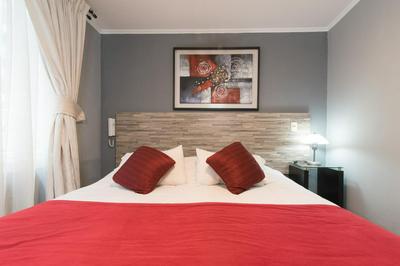 In this area
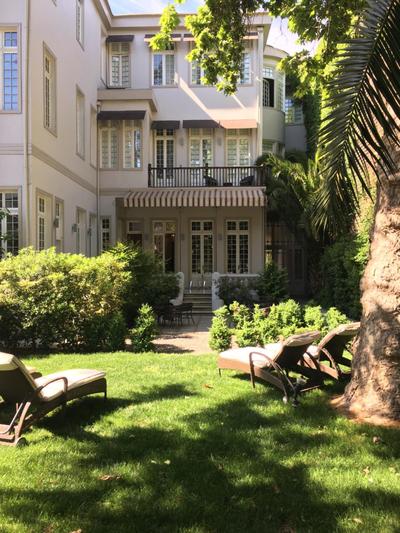 In this area
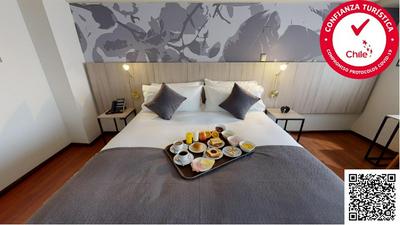 In this area
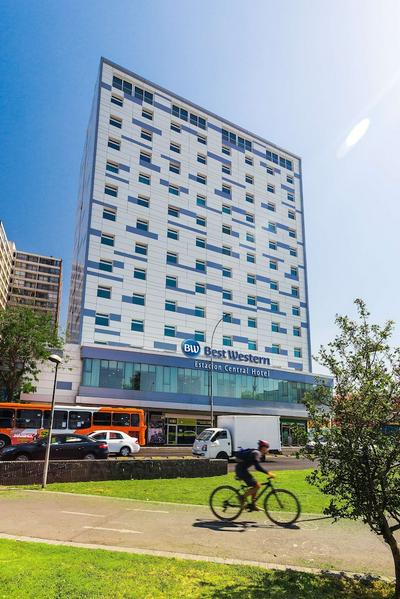 In this area
 In this area
 In this area
Barrio Yungay
Concha y Toro 33 Hotel Boutique by Nobile
8.7· 711 reviews
approx. from£95 / nightSee prices
Getting around
Yungay is compact and best explored on foot; the grid is flat and the distances short. Two Line 5 metro stations frame it: Quinta Normal on the western edge, about a 10-minute walk to the barrio’s centre and right by the park and the Museum of Memory, and Cumming to the east. República, on Line 1, is roughly an 11-minute walk to the south. From Quinta Normal it is only a few stops on Line 5 to the historic centre and Plaza de Armas, and easy interchanges reach Lastarria, Bellavista and Providencia. Barrio Brasil is walkable next door.
For the airport, it is a ride-hail or airport-bus trip of roughly 40 to 60 minutes depending on traffic, as there is no direct metro to the terminal. Within the barrio, taxis and ride-hail apps are cheap and useful after dark.
The practical truth is simple: Yungay rewards people who like to wander, stop, look up, and then look again at the wall opposite. It is not the city’s most polished address, and thank goodness for that. It is one of the places where Santiago still feels like a city with a pulse rather than a brochure.
Gallery
Barrio Yungay in pictures
Barrio Yungay — your questions
Is Barrio Yungay a good area to stay in Santiago?
Yes, if you want character and value over luxury. It is one of Santiago’s oldest heritage barrios, full of murals, cités and inexpensive, excellent food, with two Line 5 metro stations for easy access to the rest of the city. Luxury and business travellers will usually prefer Providencia or El Golf, but for atmosphere and price Yungay is hard to beat.
Is Barrio Yungay safe?
It is broadly safe and enjoyable to explore on foot during the day, and it feels like a genuine residential neighbourhood rather than a tourist zone. As in any mixed working-class barrio, keep valuables discreet, favour busier streets, and use a taxi or ride-hail app rather than walking quiet blocks late at night.
What is Peluquería Francesa and is it worth visiting?
It began as a barbershop in 1868 and grew into a French-Chilean restaurant, bar and house museum full of antiques for sale. You can still get a shave, then eat duck or oysters in rooms that feel wonderfully unchanged. It is one of Yungay’s signature experiences and absolutely worth a meal.
What are the best things to see in Barrio Yungay?
Start with Plaza Yungay and the Monumento al Roto Chileno, then walk the cités and mural-covered streets, especially Pasaje Adriana Cousiño. If you have time, add the Museo de la Educación Gabriela Mistral, the Museo de la Memoria y los Derechos Humanos, and a stroll through Quinta Normal.